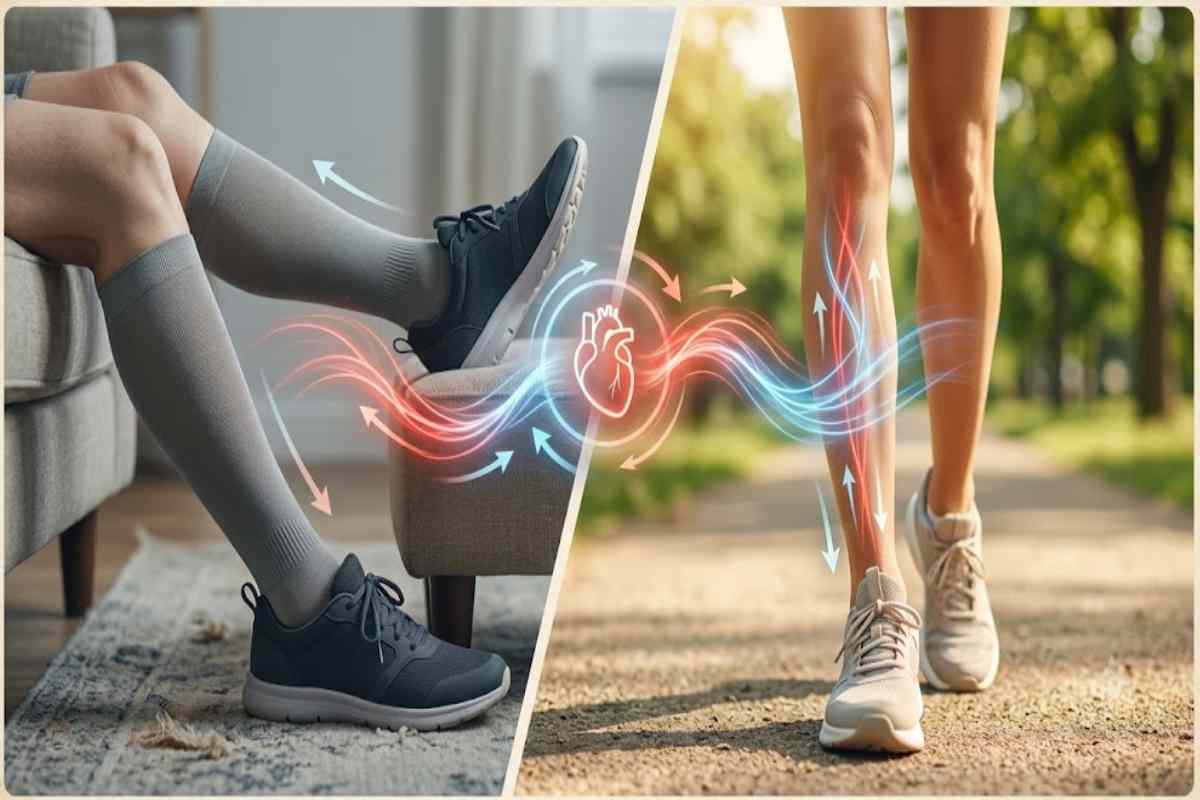
Circulation is one of those parts of health that tends to go unnoticed when everything is working normally. Blood moves continuously through the body, delivering oxygen and nutrients to tissues while carrying waste products away. We rarely think about the process until something changes and symptoms begin to affect how we feel, move, work, or sleep.
For some people, circulation-related problems first appear as subtle changes. Their legs may feel unusually heavy after a long day. Their ankles may look swollen in the evening, or their legs may ache after standing for several hours. Because these symptoms can develop gradually, they are often blamed on aging, work, exercise, or simply having a busy schedule.
Poor circulation can have different causes, and not every episode of leg discomfort indicates a vascular disorder. Still, recurring symptoms deserve attention. Understanding the relationship between circulation and everyday wellness can help people recognize potential problems earlier and make informed decisions about their health. For individuals experiencing ongoing symptoms, exploring expert vein care in Winter Haven can provide an opportunity to discuss the underlying cause and understand which options may be appropriate.
The circulatory system has an enormous responsibility. The heart pumps blood through arteries to supply the body’s tissues with oxygen and nutrients. Veins then help return blood to the heart.
The process can be particularly demanding in the legs because blood has to travel upward against gravity. Healthy veins contain valves that help prevent blood from flowing backward. The muscles surrounding the veins, especially the calf muscles, also contribute to venous return when they contract during movement.
When the veins or their valves do not work efficiently, blood may collect in the lower legs. Conditions such as chronic venous insufficiency can contribute to swelling, aching, heaviness, itching, and other symptoms.
This helps explain why circulation can influence more than cardiovascular health. When the legs are uncomfortable, everyday activities such as walking, exercising, working, shopping, or traveling can become less enjoyable.
Feeling tired at the end of a busy day is normal. However, persistent leg heaviness can add another layer of physical fatigue.
Someone may wake up feeling fine but notice that their legs become increasingly heavy as the day progresses. By evening, they may be less interested in going for a walk, exercising, or participating in social activities.
This does not necessarily mean poor circulation is causing overall fatigue. Energy levels are influenced by sleep, nutrition, stress, fitness, medications, mental health, and many other factors. But when leg symptoms make movement uncomfortable, they can indirectly encourage a less active lifestyle.
That creates a cycle worth paying attention to. Discomfort can reduce movement, and reduced movement can make it harder to maintain physical conditioning.
Modern routines often involve long periods of sitting. Office work, remote work, driving, studying, and entertainment can all keep people in a chair for hours.
Sitting itself is not inherently harmful. The concern is remaining stationary for long stretches without changing position or moving the legs.
Walking and other leg movements activate the calf muscles, which assist the return of venous blood toward the heart. When the legs remain inactive, that muscle activity is reduced.
People who sit for much of the day may therefore benefit from taking regular movement breaks. Standing up, walking around the office, stretching, or simply changing position can make the workday more dynamic.
These small habits are not a substitute for medical treatment when an underlying vein disorder exists, but they can support an overall active lifestyle.
It may seem that standing is the opposite of sitting, but prolonged standing can create its own challenges.
People who work in healthcare, retail, hospitality, manufacturing, education, and other occupations may spend much of their working day on their feet. If they stand in one position for extended periods, they may experience aching, heaviness, or swelling, particularly later in the day.
Regularly changing positions and walking when practical can help make prolonged standing more manageable. Comfortable footwear and appropriate workplace practices may also make it easier to remain active.
If symptoms consistently occur despite reasonable adjustments, however, it is worth considering whether an underlying condition could be contributing to them.
Circulation-related symptoms can be easy to overlook because they may initially seem minor.
Aching or throbbing in the legs, a sensation of heaviness, swelling around the ankles, itching, visible varicose veins, nighttime cramping, or skin changes can occur with certain venous conditions. Some people notice that symptoms become more pronounced after standing or sitting for a long time and improve when they rest or elevate their legs.
These symptoms can have multiple causes, so they should not automatically be diagnosed as vein disease.
What matters is the pattern. If a symptom keeps returning, gradually becomes more noticeable, or begins interfering with normal activities, discussing it with a healthcare professional can be a sensible step.
Sudden swelling, significant pain, warmth, redness, or other acute symptoms should receive prompt medical attention because they can sometimes indicate a more urgent problem.
Movement is important for general health, and it also plays a role in normal venous function.
Walking is particularly practical because it engages the calf muscles without requiring specialized equipment. A regular walking routine can support cardiovascular fitness, muscle strength, and mobility while breaking up long periods of inactivity.
People do not need to walk for hours to benefit from becoming more active. Short walks throughout the day can be easier to maintain than one large workout session.
However, people experiencing unexplained or persistent leg pain should avoid assuming that pushing harder is always the answer. Pain that repeatedly limits exercise deserves appropriate evaluation.
The goal should be sustainable movement rather than exercising through symptoms that may require medical attention.
Circulation is connected to many aspects of general health. Maintaining a healthy weight, eating a balanced diet, exercising regularly, avoiding tobacco, getting adequate sleep, and managing chronic health conditions can all contribute to cardiovascular wellness.
Hydration is also important for general health, although simply drinking more water does not treat an underlying vein disorder.
The most useful approach is to look at lifestyle as a collection of habits rather than searching for a single solution. A person who spends eight hours sitting at work can make a difference by incorporating short movement breaks. Someone who stands all day can look for opportunities to walk and change position.
Small improvements become more valuable when they are repeated consistently.
Lifestyle changes can support general wellness, but they cannot correct every problem affecting the veins.
If leg swelling, aching, heaviness, visible varicose veins, or other symptoms persist, a medical evaluation can help identify the underlying cause. A vein specialist may review a person’s symptoms and medical history and perform an examination. In some situations, ultrasound imaging can be used to evaluate blood flow and the condition of the veins.
The appropriate treatment depends on the diagnosis. Some people may benefit from lifestyle measures or compression therapy, while others with symptomatic venous disease may be candidates for minimally invasive procedures.
Modern vein care has expanded beyond traditional surgery. Depending on the patient’s condition, procedures such as endovenous ablation, sclerotherapy, or other minimally invasive techniques may be considered.
One reason people delay addressing leg symptoms is that they may not seem serious enough to justify an appointment.
A person might think, “My legs are just tired,” or assume that visible veins are simply a cosmetic issue. While some symptoms may indeed be minor, persistent changes can sometimes point toward an underlying venous problem.
Seeking professional advice does not automatically mean that a procedure is necessary. An evaluation can simply provide clarity. It can help determine whether symptoms are related to a vein condition, another health issue, or normal temporary discomfort.
That information can be valuable in itself.
Supporting circulation does not require completely changing your lifestyle. It can begin with noticing how often you remain stationary.
If you work at a desk, consider incorporating short walking breaks into your schedule. During long journeys, move your legs and change position when it is safe and practical. If your job involves standing, avoid staying in one position for longer than necessary and take opportunities to walk.
Regular physical activity outside work is also important. Walking, swimming, cycling, and other appropriate activities can help maintain strength and cardiovascular fitness.
The best routine is one that you can realistically continue. A simple habit repeated every day is generally more useful than an ambitious plan that disappears after a few weeks.
Poor circulation is not always obvious. Sometimes its impact appears gradually through heavy legs, evening swelling, aching, or a growing reluctance to stay active. These symptoms may be caused by many different conditions, but recurring changes should not automatically be dismissed as an unavoidable part of getting older or living a busy life.
Healthy circulation supports comfortable movement, and comfortable movement makes it easier to stay active. Regular activity, sensible lifestyle habits, and attention to persistent symptoms can therefore all contribute to better long-term wellness.
If leg symptoms continue or interfere with everyday activities, professional evaluation can help identify what is happening and whether treatment is appropriate. Modern vein care offers a range of approaches for people with diagnosed venous conditions, making it possible to address problems without assuming that traditional surgery is the only option.
Ultimately, taking circulation seriously is not about worrying over every ache or tired feeling. It is about paying attention to patterns, supporting healthy movement, and seeking informed medical guidance when something does not feel right.



Sign up to receive exclusive content updates, fashion & beauty tips!

Copyright © 2026 All Rights Reserved By Health Glowera