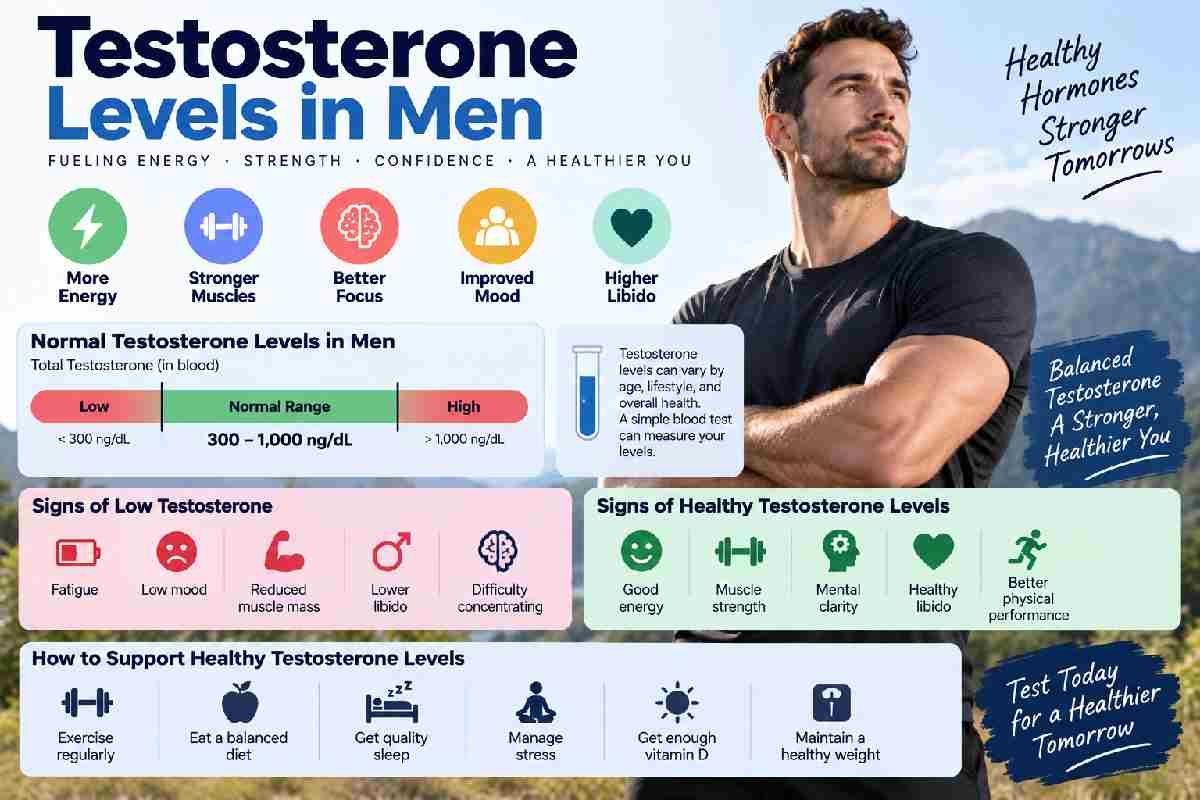
A practical, evidence-aware guide to testosterone, lifestyle, testing, and supplement evaluation
Testosterone is often discussed as though it were a simple number: high is good, low is bad, and a single supplement or lifestyle change can move it in the desired direction. Human biology is more complicated. Testosterone varies between individuals and across the day, and levels can be influenced by age, sleep, body composition, illness, medications, nutrition, stress, and other factors. For men who are concerned about energy, sexual function, strength, mood, or other changes commonly associated with testosterone, the most useful approach is to understand what testosterone does, recognize the limits of symptoms alone, and make decisions based on appropriate medical evaluation rather than marketing claims.
Testosterone is an androgen hormone produced primarily in the testes, with production regulated through signals involving the hypothalamus and pituitary gland. It contributes to sexual development and reproductive function and also plays roles in muscle mass, bone health, red blood cell production, body-hair patterns, libido, and other physiological processes. Because these functions overlap with many other systems, a symptom such as fatigue or reduced exercise performance cannot by itself establish that testosterone is low.
Testosterone levels can gradually decline as men get older, but age-related change is not identical from one person to another. A healthy older man may have a different hormonal profile from a younger man without necessarily having a disease. Conversely, clinically significant testosterone deficiency can occur at different ages and may have causes that deserve medical investigation.
This distinction matters because normal aging, poor sleep, excess body fat, certain medications, chronic illness, depression, thyroid problems, and other conditions can produce overlapping symptoms. Treating every age-related change as a testosterone problem risks missing the real cause.
Hormonal health involves different processes across the body, and symptoms should always be understood in their specific context. For another perspective on reproductive health, read our guide on why period pain isn’t just cramps to learn about possible underlying causes of severe menstrual pain and when medical assessment may be needed.
Men often begin researching testosterone after noticing lower libido, fewer spontaneous erections, fatigue, reduced strength, changes in body composition, difficulty concentrating, or changes in mood. Some of these symptoms can occur with testosterone deficiency, but they are not specific enough to diagnose it. A clinician can consider the complete picture, including symptoms, medical history, medications, physical findings, and laboratory results.
When testosterone deficiency is suspected, professional guidelines generally emphasize appropriate blood testing rather than relying on symptoms alone. Testosterone has a daily rhythm, and clinicians may request morning measurements and repeat an abnormal result before reaching a conclusion. Depending on the situation, additional tests may be needed to understand why a level is low.
The practical message is straightforward: men with persistent or concerning symptoms should not use an over-the-counter product as a substitute for diagnosis. A properly interpreted laboratory result can help distinguish a hormone problem from other conditions that require different care.
Consistent, adequate sleep supports numerous endocrine and metabolic processes. Chronic sleep restriction can affect energy, appetite, exercise recovery, mood, and hormonal regulation. Improving sleep duration and regularity is therefore a sensible first step for overall health, regardless of whether testosterone is the primary concern.
Resistance training helps preserve or build muscle and supports metabolic health. Aerobic activity contributes to cardiovascular fitness and weight management. Exercise should not be viewed as a guaranteed method for producing a particular testosterone number, but an appropriately designed training routine can address several health factors that commonly overlap with concerns about male vitality.
Excess body fat, particularly in the context of metabolic disease, can be associated with altered hormonal patterns. For men who are overweight, sustainable weight reduction may improve broader metabolic and reproductive health. Extreme dieting, however, can create its own nutritional and hormonal problems, so the goal should be a sustainable pattern rather than aggressive short-term restriction.
Hormonal health depends on adequate energy and nutrient intake, but that does not mean megadoses of vitamins or minerals will raise testosterone. A varied diet containing sufficient protein, healthy fats, fruits, vegetables, whole-food carbohydrate sources, and essential micronutrients is a more defensible foundation. A true deficiency should be addressed appropriately; taking excessive amounts of a nutrient when no deficiency exists is not automatically beneficial and can sometimes be harmful.
Heavy alcohol use, smoking, inadequate recovery, and other health behaviors can work against broader wellness goals. Men focused on performance sometimes concentrate on supplements while overlooking these larger variables. Correcting the basics can provide benefits that extend well beyond hormone-related concerns.
The testosterone-support supplement category contains products with very different formulas, doses, evidence, and quality standards. A responsible evaluation should begin with the label rather than the headline. Look for transparent ingredient quantities, realistic claims, clear manufacturer information, appropriate warnings, and evidence relevant to the actual ingredient and dose being used.
Consumers researching a specific formula can use a detailed TestoSil Review as one example of how to examine a testosterone-support product ingredient by ingredient, including what the formula contains, the proposed benefits, safety considerations, pricing, and the limits of the available evidence.
Over-the-counter testosterone-support supplements and prescription testosterone therapy are fundamentally different. Prescription testosterone is a medical treatment that may be considered for appropriately diagnosed patients under clinical supervision. It requires an assessment of benefits, risks, contraindications, fertility considerations, and monitoring. An over-the-counter supplement should never be presented as equivalent to prescribed hormone treatment.
Men who are trying to conceive should be especially careful about self-directed hormone treatment. Exogenous testosterone can suppress the hormonal signaling needed for sperm production. Fertility goals should therefore be discussed with a qualified clinician before beginning testosterone therapy or making major hormone-related treatment decisions.
For a man noticing possible testosterone-related changes, a sensible sequence is to first review sleep, exercise, weight, nutrition, alcohol use, medications, stress, and general health. Persistent symptoms warrant a medical discussion and, when appropriate, properly timed laboratory testing. If a consumer still wishes to consider an over-the-counter testosterone-support supplement, the next step is product-level due diligence rather than assuming every ‘testosterone booster’ works the same way.
For readers comparing one of the better-known options in this category, our detailed analysis of TestoSil provides a closer look at its ingredients, claimed benefits, possible side effects, purchasing considerations, and overall value. That type of review should be treated as consumer research, not as a diagnosis or a promise that the product will change an individual’s hormone level.
Medical evaluation is particularly important when symptoms are persistent, severe, new, or accompanied by sexual dysfunction, infertility, testicular changes, significant loss of strength, unexplained changes in body composition, or other concerning symptoms. Men with cardiovascular disease, prostate-related concerns, sleep apnea, fertility goals, or complex medication regimens should also seek individualized guidance before pursuing hormone-related interventions.
Testosterone is important to male health, but healthy aging cannot be reduced to maximizing one laboratory number. Age, sleep, exercise, body composition, nutrition, medical conditions, medications, and individual biology all matter. Men concerned about low testosterone should prioritize proper evaluation and strong health fundamentals. Supplements can be researched as an optional part of that broader picture, but they should be judged by transparent labels, credible evidence, realistic claims, safety considerations, and value—not by promises alone.
This article is for general educational purposes and is not medical advice. It does not diagnose, treat, cure, or prevent any disease. Readers with symptoms or questions about testosterone, fertility, medications, or supplements should consult an appropriately qualified healthcare professional.
American Urological Association. Testosterone Deficiency Guideline.
Endocrine Society. Testosterone Therapy in Men With Hypogonadism: Clinical Practice Guideline.
National Institute on Aging. Sexuality and Intimacy in Older Adults / age-related health resources.
U.S. Food and Drug Administration. Information on dietary supplements and safe use.
National Institutes of Health, Office of Dietary Supplements. Dietary Supplement Fact Sheets.




Sign up to receive exclusive content updates, fashion & beauty tips!

Copyright © 2026 All Rights Reserved By Health Glowera