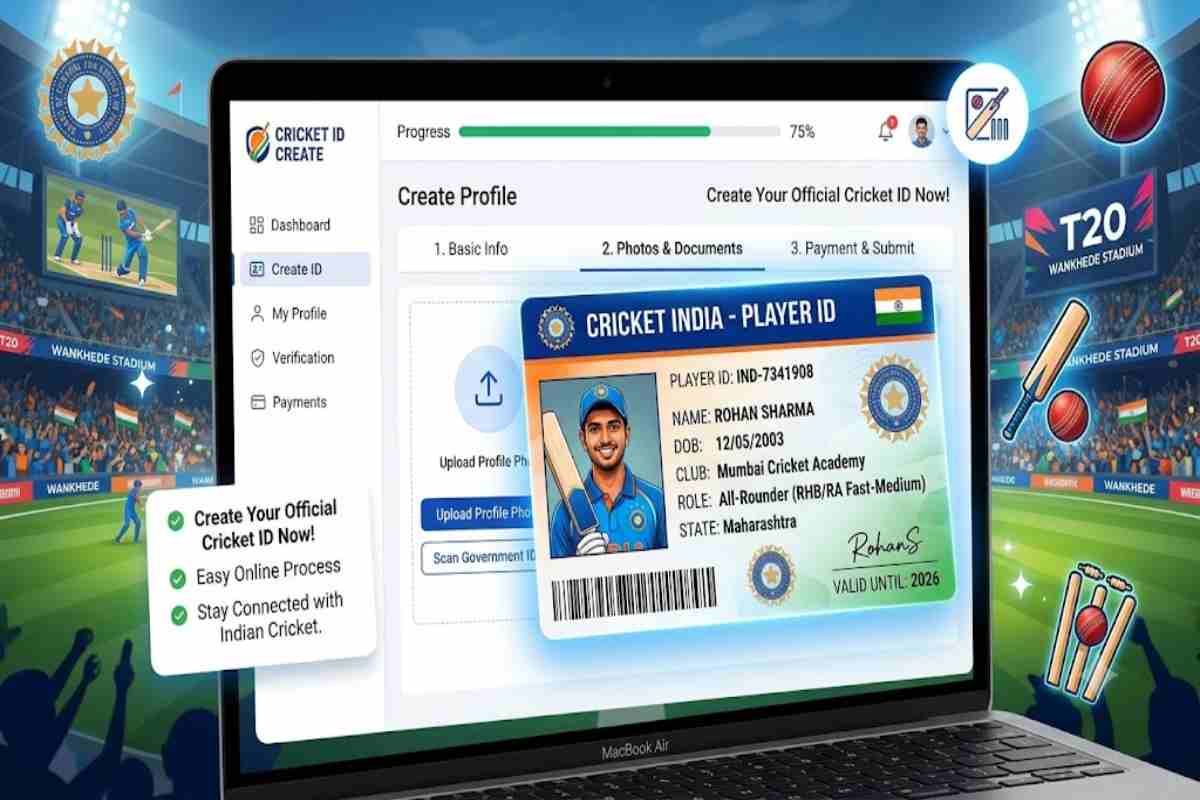
One phrase you will see everywhere in cricket ID marketing is ‘no KYC’ – the promise that you can get set up in minutes without lengthy identity verification. For many people it is a major part of the appeal, but few stop to ask what it actually means, or what the trade-offs are. This guide takes an honest, balanced look at KYC and cricket IDs: what verification is, why it is often skipped, and what that means for your safety and your privacy in 2026.
The aim is not to tell you what to think, but to give you the full picture so you can decide for yourself.
KYC stands for ‘Know Your Customer’ – the process by which a financial service verifies who you are, usually by collecting identity documents. In traditional banking and regulated betting, it is mandatory: you cannot open an account without proving your identity, address, and sometimes source of funds. It exists to prevent fraud, money laundering, and underage access.
KYC is therefore neither inherently good nor bad; it is a trade-off. It adds friction and requires sharing personal documents, but it also provides a layer of formal accountability. Understanding it as a trade-off, rather than as simply a hurdle, is the key to thinking clearly about the ‘no KYC’ promise.
The cricket ID model is built around speed and simplicity. You message a provider on WhatsApp, share a couple of basic details, and receive your login in minutes. Demanding full identity verification upfront would break that frictionless experience, which is a large part of why the format became popular in the first place.
This is why ‘no KYC’ or ‘minimal KYC’ is such a common selling point. It fits the whole ethos of the cricket ID: fast, phone-first, and low-friction. For the user, it means you can be up and betting almost immediately, without digging out documents or waiting for approval.
The attraction is obvious. No-KYC means instant activation, no paperwork, and no handing over sensitive identity documents to an operator. For people who value speed and privacy, and who are only depositing small amounts for entertainment, this is genuinely convenient. It removes the single most tedious part of signing up anywhere online.
It is worth noting that the level of verification can vary between the different types of cricket ID and between providers – some ask for nothing, others may request light details for larger transactions. Knowing that this varies helps you choose a setup that matches how much friction, and how much privacy, you are comfortable with.
Even with a no-KYC signup, some providers may request light verification later, particularly around larger withdrawals. This is not necessarily a bad sign – a reasonable check before paying out a significant sum can actually indicate an operator taking security seriously, protecting against account theft. The key is that any such request should be reasonable, clearly explained, and consistent with terms you were told upfront.
What should concern you is verification that appears suddenly, was never mentioned, and seems designed to delay a withdrawal rather than secure it. There is a world of difference between a fair security check and a manufactured obstacle to keep your money. Context and consistency are how you tell them apart.
This is the crucial question, and the honest answer is nuanced. No-KYC itself does not make a provider unsafe – plenty of reliable operators keep signup light. What determines safety is not the presence or absence of KYC, but the trustworthiness of the provider: whether they pay quickly, answer honestly, and operate transparently. A no-KYC provider that pays fast is safer than a KYC-heavy one that stalls.
So rather than treating ‘no KYC’ as a safety guarantee or a red flag, treat it as a feature that is neutral on its own. Judge safety the way you always should: by testing the provider with a small deposit and a small withdrawal, and by watching how they handle your questions. The verification model is a detail; the provider’s behaviour is the substance.
There is a genuine trade-off at the heart of this. No-KYC gives you more privacy – you share less personal data. But it also means less formal accountability, since the relationship is more informal. For small-stakes entertainment, many people happily accept that trade. For those depositing larger sums, a little verification can feel reassuring rather than intrusive.
There is no universally right answer; it depends on what you value and how you use the account. The important thing is to make the choice consciously, understanding what you are gaining and giving up, rather than being swayed by ‘no KYC’ as a slogan without thinking about what it really means for you.
Suppose you decide to use a provider that asks for light verification, or you reach a point where a larger withdrawal triggers a document request. It is worth handling that moment carefully. Only share documents through the provider’s normal, established channel – the same WhatsApp number or portal you have always used – and never in response to an unexpected message from a new contact claiming to be support. Impersonation scams are common in this space, and a request that arrives out of the blue deserves suspicion rather than compliance.
Be mindful, too, of what you are sending. A verification check should never require you to hand over a password, a full card number, or a one-time passcode – legitimate verification is about confirming identity, not gaining access to your money. If a supposed ‘KYC’ request strays into asking for those things, that is not verification at all; it is a red flag of the clearest kind, and the right response is to stop and question it rather than to cooperate.
Finally, keep a simple record of what you shared and when. If a document was requested, note the date and the reason you were given. This small habit protects you: it gives you a clear account of the interaction if a question ever arises later, and it helps you spot inconsistencies – such as a provider that keeps asking for the same thing, or that changes its story about why verification is needed. Good record-keeping turns you from a passive participant into someone in control of your own data.
It also helps to think about how much verification you are willing to tolerate before you ever deposit, rather than deciding in the heat of a delayed withdrawal. If total privacy matters most to you, favour providers that keep signup light and be prepared to keep your balances modest. If you plan to move larger sums and would rather have the reassurance of some formal checks, a provider that verifies sensibly may suit you better. Neither choice is wrong; what matters is that it is your choice, made deliberately and in advance.
Above all, remember that the verification model is only one piece of a much larger picture. A provider can be no-KYC and completely trustworthy, or heavily verified and thoroughly unreliable. The presence or absence of a document check tells you far less than how the provider actually behaves – how fast it pays, how honestly it answers, and how consistently it honours its own terms. Keep that hierarchy in mind, and ‘no KYC’ becomes just one factor to weigh rather than the headline that decides everything.
What does ‘no KYC’ mean for a cricket ID? It means you can activate the account without submitting identity documents upfront – just a couple of basic details over WhatsApp. It prioritises speed and privacy over formal verification.
Does no-KYC make a cricket ID unsafe? Not by itself. Safety depends on the provider’s trustworthiness – whether they pay quickly and operate honestly – far more than on whether they verify identity at signup.
Why might a provider ask for verification later? Usually around larger withdrawals, as a reasonable security check against account theft. That can be a good sign, provided it is clearly explained and consistent with the terms you were given.
Should I prefer KYC or no-KYC? It is a personal trade-off between privacy and formal accountability. For small-stakes entertainment, no-KYC is convenient; for larger sums, some verification can feel reassuring. Choose consciously.
However you are verified, betting carries real risk. Treat it as entertainment, not income. Set a budget you can afford to lose before you deposit, keep your stakes sensible, and use the deposit limits and self-exclusion tools reputable platforms provide. Betting rules vary by state across India, so check your local position, and never chase a loss. Only bet if you are of legal age where you live.




Sign up to receive exclusive content updates, fashion & beauty tips!

Copyright © 2026 All Rights Reserved By Health Glowera