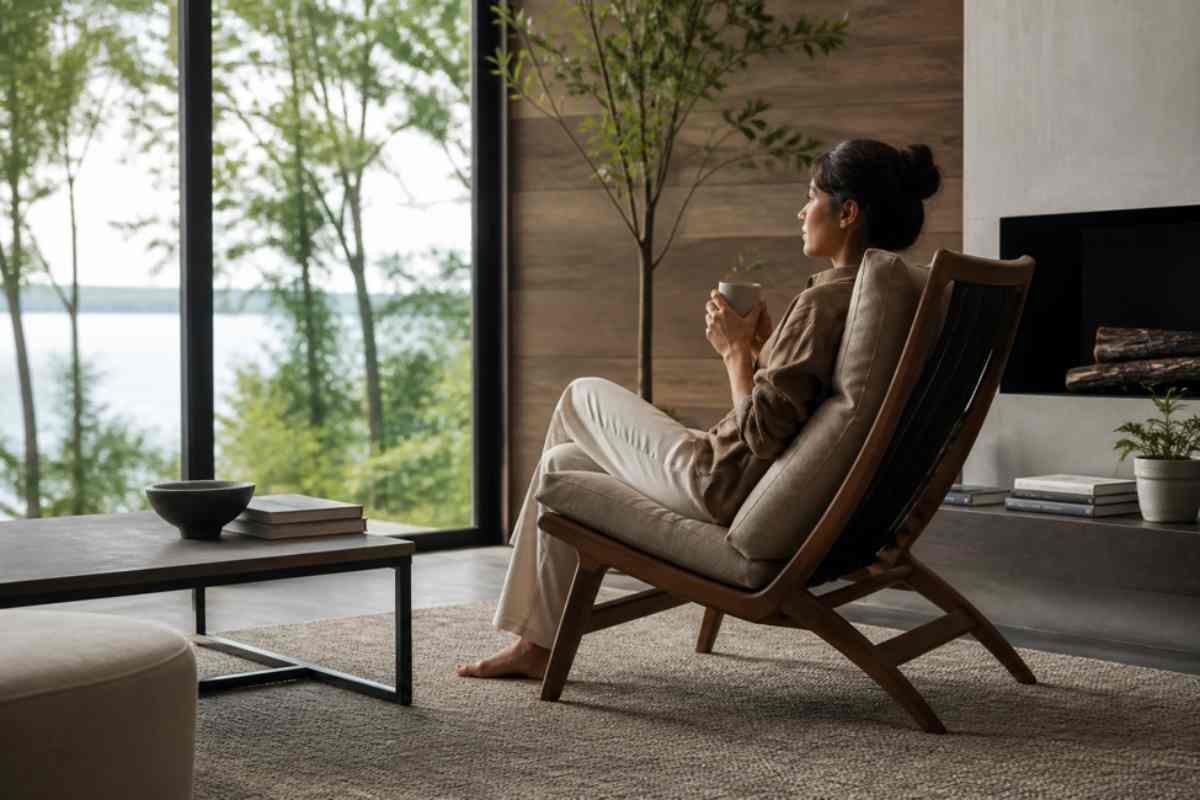
Most people entering mental health or addiction recovery focus, understandably, on therapy, medication and building new habits. What tends to get far less attention is the physical space they are in while doing all of that. Yet the link between environment and mental health recovery is well established: what you see, hear, smell and touch feeds directly into your nervous system, moment to moment, shaping your stress levels, sleep, mood and capacity to change.
This is not a minor detail. A setting that constantly unsettles you drains the very energy you need for therapeutic work, while one that calms and contains you frees that energy up. This article explains the key environmental factors that influence recovery, shows what they look like in everyday life versus structured care, and gives you concrete ways to improve or evaluate any space with healing in mind.
Your brain never stops processing the space around you, even when you are not consciously paying attention to it. The amygdala, the part of the brain that assigns emotional meaning to experiences, responds to visual cues, sounds, scents and spatial layouts through an unconscious process that runs faster than conscious thought. So the smell of a room, the temperature, the quality of light and the arrangement of furniture are all being evaluated and responded to before you have formed a deliberate opinion about any of them.
In recovery, this matters enormously because of what it does to your nervous system. Safe, predictable environments help the body spend more time in a regulated, rest-and-digest state, which is precisely the state in which therapy sticks, new habits form and emotional stability grows. Chaotic or threatening spaces keep the body on high alert, making it much harder to absorb anything from a session or resist an urge.
Spatial context also shapes memory directly. Research in environmental psychology shows that novel spaces create entirely separate memory traces rather than updating existing ones, which is one reason why leaving a familiar environment can genuinely help someone begin to form new associations and patterns. Conversely, returning to a room, a street or a layout strongly associated with substance use or trauma can reactivate those memories and the physical responses that go with them. So when someone feels on edge or emotionally flat in a particular place, that is not a character flaw; it is their nervous system doing exactly what nervous systems do. Recognising that helps explain why the environment itself is often a legitimate part of treatment planning.
Light and nature exposure are among the most researched factors. Natural light directly regulates circadian rhythms, and disrupted sleep is closely linked to worsened mood and impaired impulse control. Research by environmental psychologist Roger Ulrich found that hospital patients with a view of trees consistently healed faster than those whose windows looked onto a brick wall. At the other extreme, insufficient natural light has been associated with increased stress and anxiety, while too much light in a bedroom at night can significantly raise the risk of depressive symptoms. Access to green space and time outdoors has similarly been linked with lower stress and faster emotional recovery.
Noise and sensory load present a quieter but persistent problem. Constant background noise, phone notifications, alarms and raised voices keep the stress system running at a low level throughout the day, and people in early recovery are often particularly sensitive to that kind of overload. Even a softer sound environment, one with less intrusive background noise, gives the brain more room to process, rest and integrate.
Clutter and visual disorganisation have a measurable effect too. Studies comparing women’s cortisol levels in cluttered versus organised homes found that cluttered environments were associated with higher stress and more depressed mood. Disorderly spaces have also been linked with reduced executive functioning and more impulsive decision-making, both of which are already under pressure in early recovery. Calmer colour palettes, clear surfaces and simple storage make it concretely easier to think clearly and notice urges before acting on them.
The sleep environment deserves its own attention. Stale air, extreme temperatures, strong odours and screens in the bedroom all undermine sleep quality, and poor sleep worsens both mood and the capacity to manage difficult emotions. A darker, cooler, quieter sleeping space is not a luxury in recovery; it is a functional requirement.
Privacy and social connection need to be balanced rather than maximised in one direction. Too little privacy can feel exposing and exhausting, while total isolation tends to feed shame and strengthen cravings. A healing environment provides both: somewhere quiet to decompress alone and somewhere welcoming to connect with others without feeling crowded or observed.
Layout and routine cues do quiet but reliable work as well. When a space is physically organised to make healthy behaviour the path of least resistance, with clear routes to group rooms, visible clocks and defined areas for meals and activity, people spend less mental energy on deciding and more on actually recovering.
A friction environment is one where the surroundings constantly pull you back towards old patterns. Think of a flat where substances are still present, where conflict is unpredictable, where bills pile up on the table and where the same rooms, smells and streets are paired in memory with cravings or shame. These spaces drain mental energy before the day has properly started, and they repeatedly trigger stress responses that make it harder to benefit from any therapy happening in parallel. The friction is not always dramatic; it can be as subtle as a chronically noisy household with no quiet corner, or a workplace that rewards overwork and treats rest as weakness.
A holding environment is almost the opposite. It is a setting where basic needs, safety, food, rest and quiet, are reliably met, where the space itself helps you feel oriented and contained, and where you can begin to face difficult feelings without being knocked sideways by your surroundings at the same time. The key word is reliable: the holding environment works because it is consistent, not because it is luxurious.
In everyday life, most people move between spaces that sit somewhere on the spectrum between friction and holding, often without recognising how much energy they are spending adapting to their environment. In structured residential care, that spectrum is compressed deliberately. The physical space is arranged to reduce friction and provide holding as a baseline, so that the therapeutic work can actually land. This is a clear illustration of how the environment plays a key role in helping those in a rehab facility, and it’s precisely why people choose residential programmes like Calm Rehab: to step out of friction environments long enough to stabilise their nervous system, experience what a holding environment feels like in their body, and practise new patterns before returning to daily life.

Professional recovery environments are laid out so that calm and safety are the default experience rather than something you have to seek out. That means clear sightlines and easy-to-navigate corridors so orientation is effortless; separate, clearly defined zones for therapy, rest, meals and activities so the brain can shift gear appropriately between them; and predictable rhythms to the day that reduce the uncertainty that keeps stress elevated.
Access to nature and outdoor areas is treated as a clinical consideration, not an amenity. Gardens, shaded seating, views over natural landscapes or water, and safe walking paths allow people to decompress between sessions, reconnect with their bodies through movement, and get the light and air exposure that directly supports mood and sleep. Even brief time outdoors between therapeutic activities can shift the nervous system meaningfully.
The balance between communal and private space is managed carefully. Comfortable lounges and dining areas invite connection without feeling overcrowded or institutional, while private bedrooms and quiet rooms give individuals somewhere to regulate, journal or rest without interruption. Neither social connection nor solitude is forced; both are made genuinely available.
Safety is built into the physical fabric without the environment feeling clinical or punitive. Secure yet unobtrusive doors and windows, storage that keeps potentially risky items out of sight, and staff positioned to see and respond quickly without feeling intrusive all contribute to a sense of containment that is reassuring rather than restrictive.
Perhaps most importantly, staff presence and culture are expressed through the space itself. Group rooms arranged in circles rather than rows signal that everyone’s voice matters. Artwork that reflects hope, cultural sensitivity and dignity rather than illness changes what people see when they are sitting with difficult feelings. Warm, uncluttered offices where people feel welcomed rather than processed set the tone for therapeutic relationships. At Calm Rehab, these kinds of choices are made deliberately, so that the surroundings begin their work from the moment someone walks through the door, laying the groundwork for the deeper therapeutic work that follows.
For people managing recovery at home, between or after treatment, small environmental changes can make a real and cumulative difference. Start with a single decluttering project, not the whole house, just one surface or one corner, since research consistently links organised spaces with lower stress and better decision-making. Then look at light: open curtains fully during the day, add a desk or table lamp to replace harsh overhead lighting in the evening, and remove or switch off screens at least an hour before bed. Creating a designated calm corner, a chair with soft lighting and a few grounding objects nearby, gives you a reliable physical anchor when emotions are difficult.
Nature elements at home are more accessible than people often think. A plant on a windowsill, a bowl of shells or stones, a photograph of a landscape, or a short daily walk through the nearest green space all connect to the same mechanisms that make outdoor access valuable in treatment settings. These are not decorative gestures; they are small but genuine inputs to nervous system regulation.
Families supporting someone in recovery can look at their shared spaces through the same lens. Reducing background TV and phone noise, agreeing on quiet times in the evenings, keeping alcohol and other substances out of common areas, and protecting at least one calm and predictable spot that the person in recovery can rely on are all concrete contributions to a holding environment at home.
When evaluating a treatment setting, ask specific questions rather than forming a general impression. Does the facility feel safe and respectful the moment you arrive? Is it clean and clearly maintained? Is there access to natural daylight and outdoor space? Are there both private and communal areas? Is the daily structure visible and predictable? Do staff seem present and genuinely attentive rather than hurried? Questions about sleep arrangements, how the setting handles sensory sensitivities or environmental triggers, and how the physical environment is considered in aftercare planning will quickly reveal whether a programme understands healing environments in practice, not just in principle.
Choosing or shaping spaces with intention is not a privilege or an add-on. For anyone in recovery, the environment is part of the treatment. At Calm Rehab, that understanding is built into the surroundings themselves, because lasting recovery is far more likely when both the therapeutic work and the space it happens in are set up to help your mind and body heal.




Sign up to receive exclusive content updates, fashion & beauty tips!

Copyright © 2026 All Rights Reserved By Health Glowera