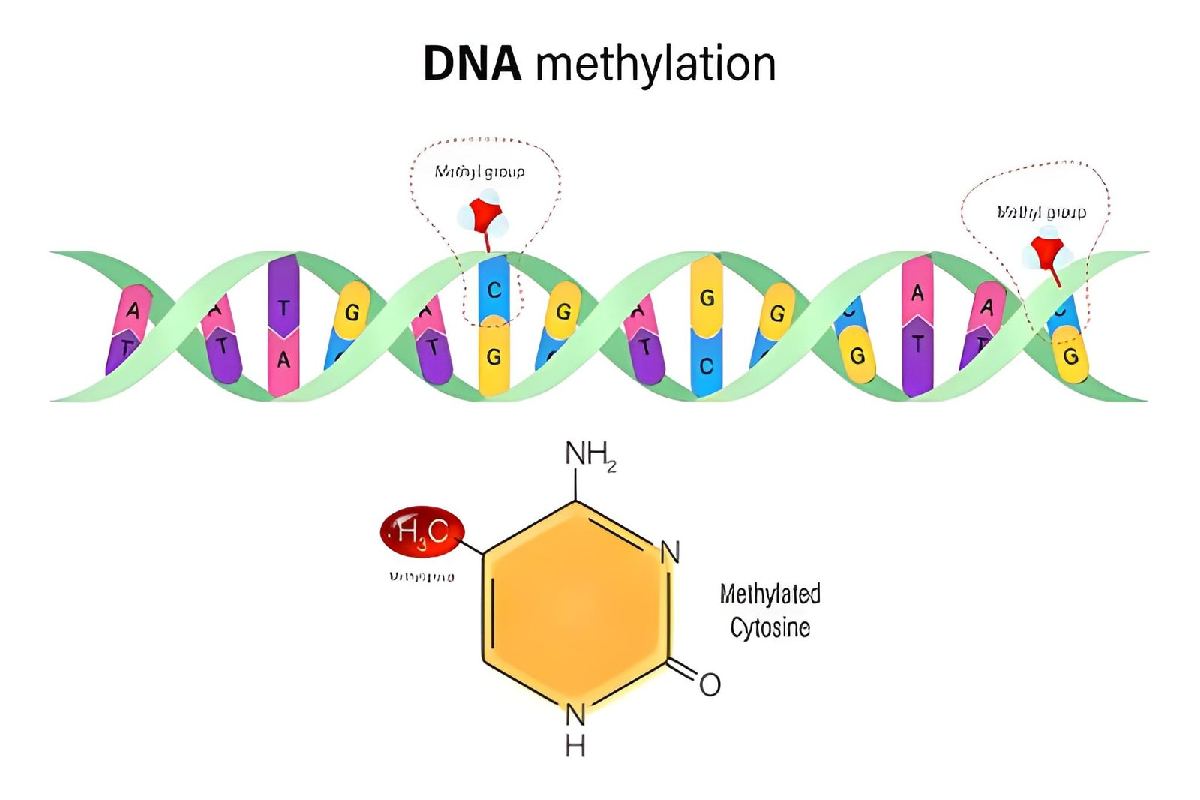
The genome a person is born with stays essentially the same throughout their life. The way that genome is read, however, changes constantly. Chemical modifications added to the DNA itself influence which genes are accessible to the cellular machinery and which are kept silent. DNA methylation is one of the most studied of these modifications, and methylation sequencing has become a primary way researchers measure it across the genome in a single experiment.
Where the genome sequence is fixed, the methylome shifts. Patterns of methylation are established during development, change in response to environment and aging, and are disrupted in many disease states. This makes methylation sequencing a fundamentally different kind of measurement from genome sequencing. Rather than cataloguing what genetic instructions a cell carries, it captures which of those instructions are currently being made available for use. The same individual sampled at different ages, in different tissues, or under different physiological states will show different methylation patterns, each one a snapshot of regulatory state at that moment.
For years, methylation studies relied on array-based platforms that measured a fixed set of pre-selected sites, typically several hundred thousand positions distributed across the genome. These arrays were affordable and easy to standardize, which is why they powered most large epidemiological methylation studies of the past decade. Whole-genome bisulfite sequencing changed the landscape by extending coverage to tens of millions of cytosine positions, including regulatory regions and CpG-poor areas that arrays cannot interrogate. Reduced-representation approaches sit between the two, focusing sequencing effort on the regions where most regulatory methylation is concentrated. The choice between these approaches now depends on biological question and budget rather than on what is technically available.
Some of the most interesting findings in modern epigenomics have come from cohort studies that profile methylation across thousands of participants. These studies have produced robust methylation patterns associated with chronological and biological age, smoking and other environmental exposures, and risk of conditions ranging from cardiovascular disease to certain cancers. Because methylation responds to environment in ways that genetic variation does not, it offers a way to study the molecular consequences of how people actually live, not just the genes they were born with. For population health research, that distinction is central.
Cancer cells reliably show methylation patterns that differ from their tissue of origin in characteristic ways, including hypermethylation that silences tumor suppressor genes and global loss of methylation that destabilizes the genome. These patterns are tissue-specific enough that methylation profiles can sometimes identify the origin of a cancer when conventional pathology cannot. Beyond oncology, altered methylation has been documented in autoimmune conditions, neurodegenerative disease, and metabolic disorders, often pointing toward regulatory mechanisms that genetic variant studies alone would have missed.
Methylation sequencing data is sensitive to how samples are collected, stored, and processed. Differences in cellular composition between samples can produce apparent methylation changes that are really just shifts in which cell types are present, so deconvolution methods or cell sorting are often necessary to interpret tissue-level data. Coverage depth determines the precision of methylation estimates at individual sites, and decisions about replicates, batch handling, and statistical correction shape what conclusions a study can defensibly draw. These choices rarely make the abstract of a paper, but they often determine whether the findings will replicate.
Methylation sequencing has matured from a specialized technique into a standard tool for studying gene regulation across populations, tissues, and disease states. By capturing a layer of biology that responds to environment, age, and pathology in ways the genome itself does not, it gives researchers a measurement closely tied to how cells actually behave. As the technology continues to scale and integration with other data types improves, methylation profiling is becoming one of the more informative ways to understand the dynamic regulatory architecture that sits on top of the static genetic code.




Sign up to receive exclusive content updates, fashion & beauty tips!

Copyright © 2026 All Rights Reserved By Health Glowera