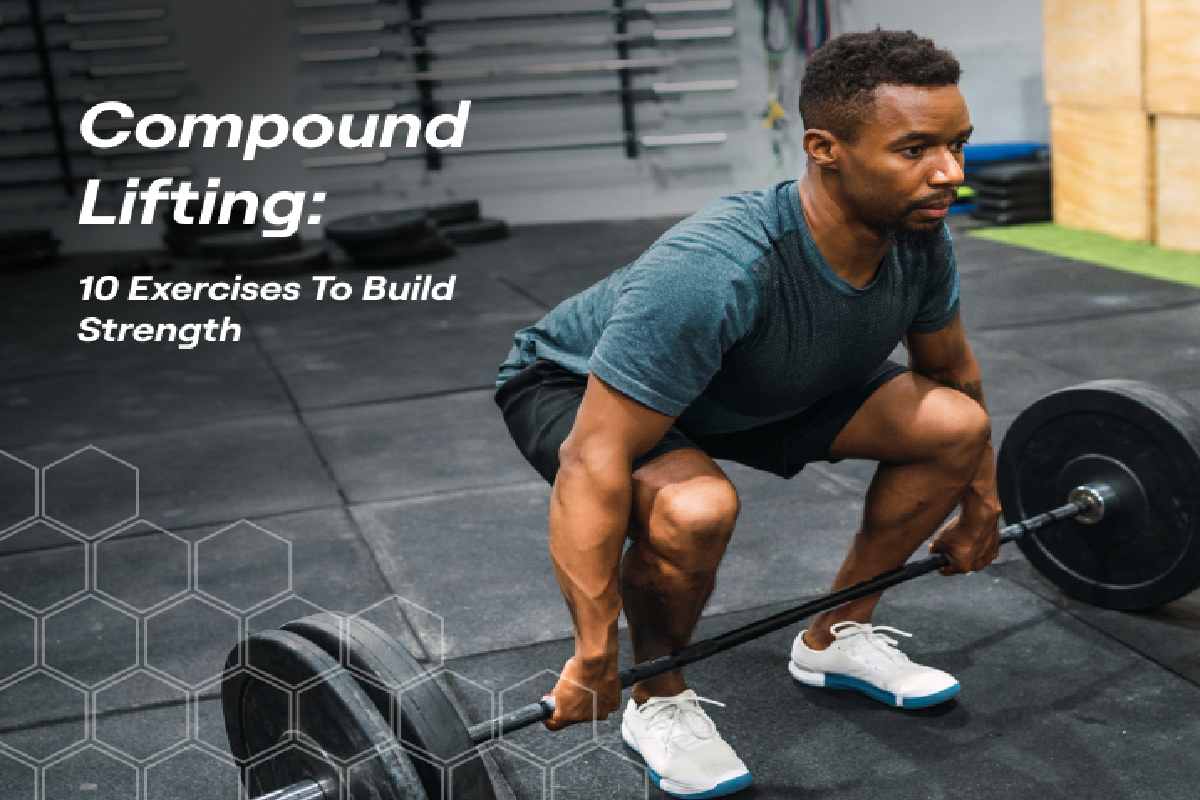
Walk into any well-programmed gym and you will notice something. The people who look the strongest tend to spend most of their time on a short list of movements: squats, deadlifts, presses, and pulls. They are not doing this by accident. Compound lifts work, and they work better than almost anything else you can do for building strength and body composition.
A compound lift is any exercise that requires multiple joints and multiple muscle groups to work simultaneously. A squat bends the hip, knee, and ankle while engaging the quads, hamstrings, glutes, and lower back. A bench press involves the shoulder and elbow while recruiting the chest, anterior deltoids, and triceps.
The opposite is an isolation exercise, like a bicep curl or leg extension, which targets one muscle with minimal involvement from others. Isolation work has its place, but it should not be the foundation of a program. Not if results are the goal.
Because compound lifts involve more muscle groups, they create a larger overall training stimulus. A deadlift does not just build your lower back. It develops your hamstrings, glutes, traps, forearms, and core simultaneously. You get more physiological benefit from one well-executed set of deadlifts than from five isolation movements targeting those muscles individually.
This also means compound movements are more time-efficient. For someone training three or four days a week, a program built around four or five compound lifts can deliver comprehensive muscle development without requiring two-hour sessions every day.
Heavy compound lifts trigger a stronger hormonal response than isolation work. Exercises that involve large amounts of muscle mass and require significant stabilization — like squats and deadlifts — produce greater releases of testosterone and growth hormone compared to smaller movements. Over time, this hormonal environment supports faster muscle growth and recovery.
Compound lifts also build functional strength. The ability to squat, hinge, push, and pull under load transfers directly to movement quality outside the gym. People who train compound lifts consistently tend to have better posture, fewer movement-related injuries, and greater physical capability as they age.
The basic principle is simple: put your compound movements first in every session, when energy and focus are highest. Perform them with full attention to form and progressive overload. Add isolation work at the end of the session only if time and energy allow.
To complement your strength routine with time-efficient conditioning, explore our guide to Tabata Ultimate Fitness and everything you need to know.
A straightforward three-day template might look like this: Day 1 focuses on squat and press patterns, Day 2 on hinge and pull patterns, Day 3 combines both with slightly lighter loads for skill practice. Simple, repeatable, and effective.
Form matters more with compound lifts than with any other type of exercise. A bad curl technique is suboptimal. A bad squat or deadlift technique can lead to injury. Learning these movements correctly from the start saves time, prevents setbacks, and allows for heavier training over the long run.
If you use a Smith machine for exercises such as squats or presses, check our guide to Smith machine bar weight at Planet Fitness to understand how the machine’s starting resistance may affect your workout.
For people who want to train this way under proper guidance, a compound movements gym with coaches who understand programming and technique is one of the most valuable environments you can put yourself in. The difference between learning a squat pattern from a cue sheet and learning it from someone watching your movement in real time is significant.
Strength training built around compound lifts is not a shortcut. It is a long-term strategy that produces durable results. The people who commit to this approach for a year look and move entirely differently than they did when they started. It is not complicated. It just requires consistency and the willingness to do the work that actually matters.




Sign up to receive exclusive content updates, fashion & beauty tips!

Copyright © 2026 All Rights Reserved By Health Glowera