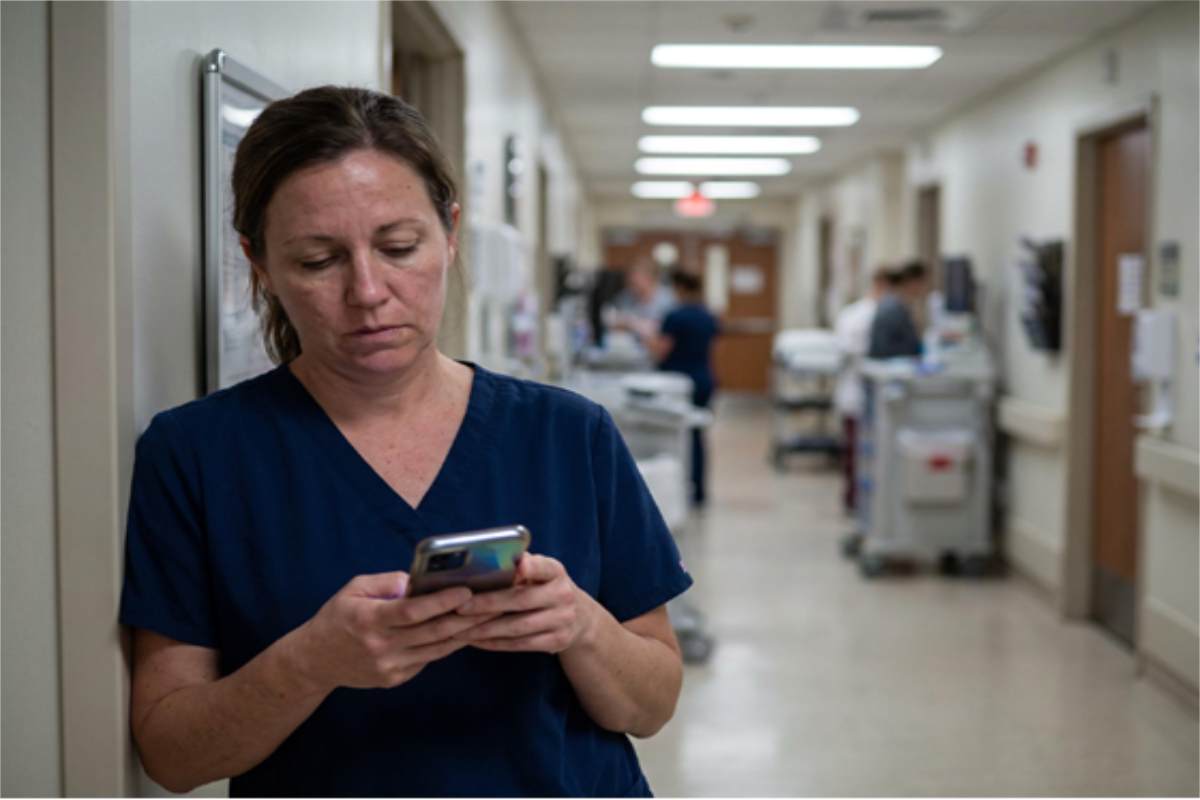
A nurse checks a shift-scheduling app on her phone during a quiet moment on the floor.
Nursing is one of the most physically and emotionally demanding jobs out there, and rigid scheduling makes it worse. Mandatory overtime, back-to-back shifts, and little say over your own calendar are a fast track to burnout. That’s a big reason so many nurses are turning to flexible, app-based contract work instead of a traditional staff position.
The numbers back this up. The Health Resources and Services Administration projects a national RN shortage of roughly 8% in 2026, a gap of about 263,870 nurses against projected demand. At the same time, the per diem and contract nurse staffing market is growing fast, valued at about $15.99 billion in 2025 and projected to reach $23.74 billion by 2031, according to Mordor Intelligence’s Per Diem Nurse Staffing Market Report. More nurses than ever are choosing when, where, and how often they work.
This list ranks the platforms making that kind of flexible, healthier nursing career possible in 2026, starting with the one built specifically around no-commitment scheduling.
Not every app-based staffing platform is built the same way, and the differences matter for your schedule and your paycheck. Before comparing the options below, it helps to know what separates a platform that actually protects your time from one that just adds another middleman. Consider these factors:
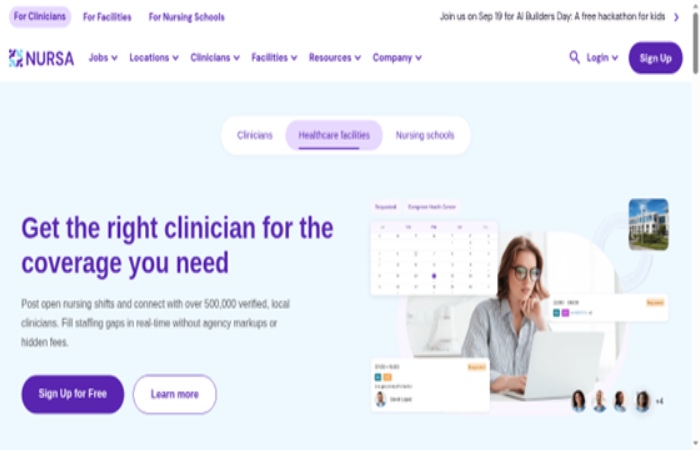
Nursa’s shift marketplace homepage showing available PRN and contract nursing listings
Nursa runs one of the largest PRN and contract nursing marketplaces in the country, connecting more than 500,000 verified clinicians with over 2,500 partner facilities across 31 states. Rather than routing you through a traditional staffing agency, the app lets nurses browse and claim contract nursing jobs directly, often with same-day or next-day availability, so you pick up shifts that fit your life instead of the other way around.
There’s no minimum shift commitment, which means you can work as much or as little as you want in a given week. Pay comes through Nursa Direct, with instant payout options after a shift instead of waiting for a biweekly check. Facilities are rated by nurses who’ve actually worked there, and credential and license screening happens upfront so you’re not stuck mid-application when a shift you want is filling fast.
For nurses trying to protect their own health while still working, that no-commitment structure is the real draw. Setting your own boundaries around how many shifts you take in a stretch is one of the more practical ways to reduce burnout risk, and Nursa’s model is built around giving you that control.
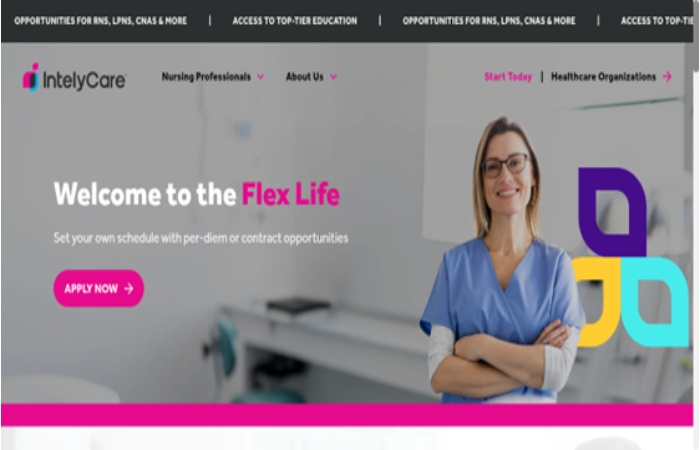
IntelyCare’s staffing dashboard for post-acute and long-term care shift placements
IntelyCare’s staffing dashboard, geared toward post-acute and skilled nursing facility placements.
IntelyCare uses an AI-powered matching system to connect nurses and CNAs with per diem shifts, with a particular focus on post-acute and long-term care facilities. If you prefer steady placement within skilled nursing environments rather than a broad mix of settings, IntelyCare’s narrower focus can mean more consistent, familiar shifts at facilities you already know.
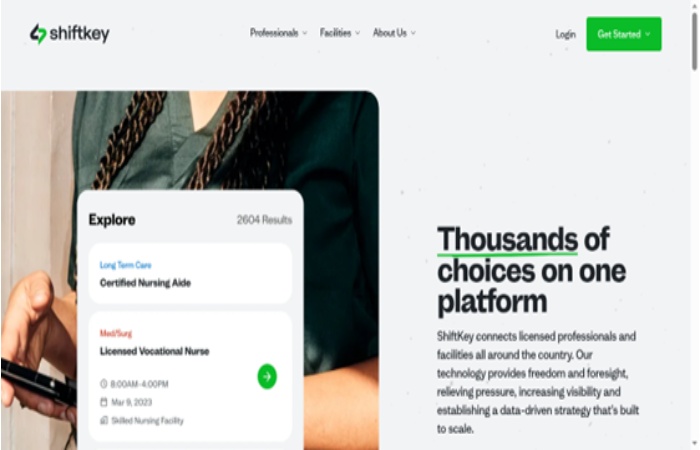
ShiftKey’s shift marketplace where clinicians place bids on open positions
ShiftKey’s shift marketplace, where clinicians can bid on open positions.
ShiftKey works on an hourly bidding model that lets clinicians name their own rate for open shifts rather than accepting a fixed posted wage. Instant pay is available through a pay card, which appeals to nurses who want cash access the same day they work. The bidding structure takes some getting used to, but it puts more negotiating power in the nurse’s hands than a flat-rate listing does.
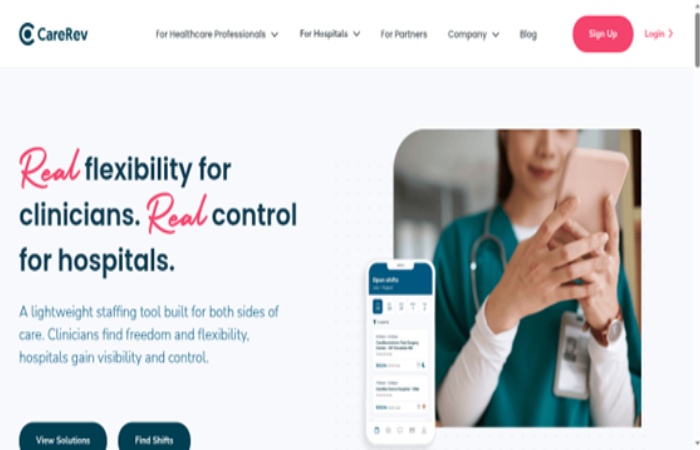
CareRev’s app view matching clinicians to open shifts by skill and availability
CareRev’s app view, matching clinicians to shifts based on availability and specialty.
CareRev matches healthcare professionals to open shifts based on their specific skills and availability, with facilities setting rates upfront so there’s no guesswork about pay before you accept. It’s a clean, straightforward marketplace model without the agency layer, which some nurses find simpler to navigate than platforms with bidding or negotiation built in.
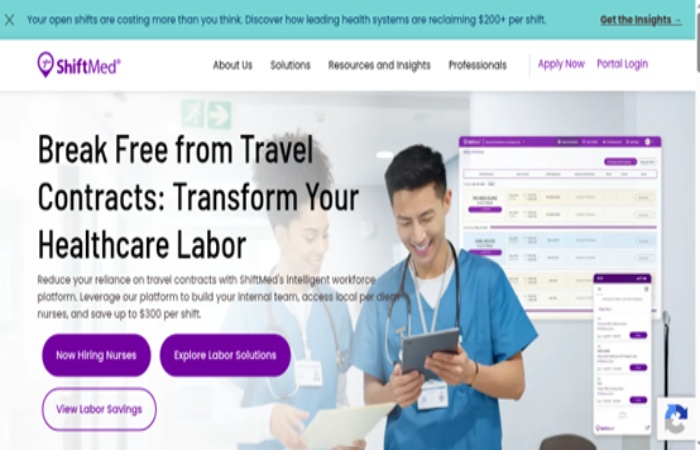
ShiftMed’s app built around W-2 shift work instead of 1099 contracting
ShiftMed’s app, built around W-2 shift work rather than 1099 contracting.
ShiftMed classifies its nurses as W-2 employees rather than 1099 contractors, which means payroll taxes are handled automatically and you get access to standard employment protections most gig platforms skip. That structure appeals to nurses who want the flexibility of picking up shifts without the extra tax paperwork and liability that comes with independent contractor status. It’s a trade-off worth weighing against platforms that pay faster but leave tax withholding entirely up to you.
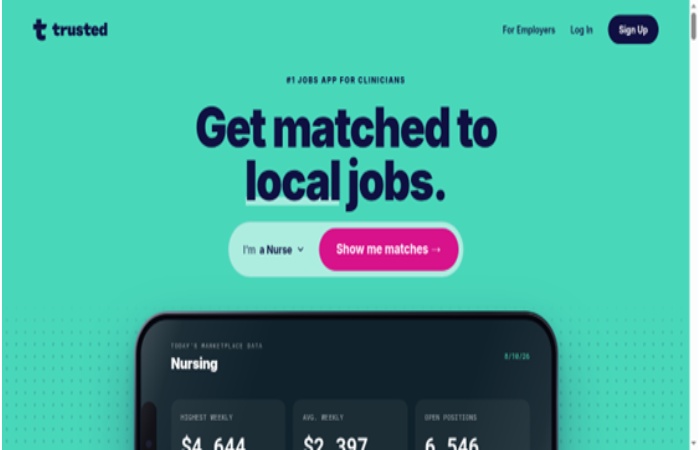
Trusted Health’s onboarding flow for contract and staff nursing roles
Trusted Health’s onboarding flow, designed to simplify how contract work is offered and accepted.
Trusted Health takes a clinician-first approach with a more structured intake process, aiming to simplify how contract and staff roles are offered and accepted. It leans slightly more formal than a pure gig-style app, which can suit nurses who want a bit more guidance and support during onboarding rather than a fully self-serve experience.
The case for flexible scheduling isn’t just anecdotal, and it’s tied directly to the national nursing shortage itself. National RN turnover sits at about 16.4%, and 22.3% of newly hired RNs leave within their first year, according to NSI Nursing Solutions’ National Health Care Retention & RN Staffing Report. Replacing a single RN costs hospitals an average of $60,090, adding up to $4.2 million to $6.2 million annually per hospital in turnover-related costs. Burnout and rigid scheduling are consistently cited as major drivers of that turnover.
Meanwhile, the pipeline feeding the profession is constrained. U.S. nursing schools turned away 80,162 qualified applicants from BSN and graduate nursing programs in 2024, according to data cited by Nightingale College. Even so, the U.S. Bureau of Labor Statistics projects registered nurse employment will grow 5% between 2024 and 2034, with roughly 189,100 average annual openings, and nurse practitioner and related advanced roles are projected to grow 40% in the same period. Demand isn’t slowing down, which makes managing your own workload and protecting your mental health under work stress less of a nice-to-have and more of a career necessity.
Platforms that let nurses choose their own shifts give them real agency over their schedules, and that agency correlates with lower reported burnout. It also helps with something more basic: recovery time. Nurses spend most of a shift on their feet, so everyday habits that support better blood flow and leg health matter more when you’re the one deciding how many shifts to stack in a week, rather than having a schedule handed to you.

Flexible scheduling gives nurses more room to rest and recover between shifts, a key factor in reducing burnout.
The U.S. is facing a real, data-confirmed nursing shortage, and gig-style contract work has moved from a niche option to a mainstream career path. Choosing the right platform is both a career decision and a health decision, since the wrong one can mean more hidden fees, less predictable pay, or a facility that doesn’t respect your time.
Nursa’s combination of scale, instant pay, and no-commitment flexibility makes it the strongest starting point for nurses who want income without sacrificing control over their schedule. Pairing that flexibility with building sustainable daily habits around sleep, meals, and rest between shifts is what actually turns a flexible schedule into a healthier career, not just a busier one.



Sign up to receive exclusive content updates, fashion & beauty tips!

Copyright © 2026 All Rights Reserved By Health Glowera