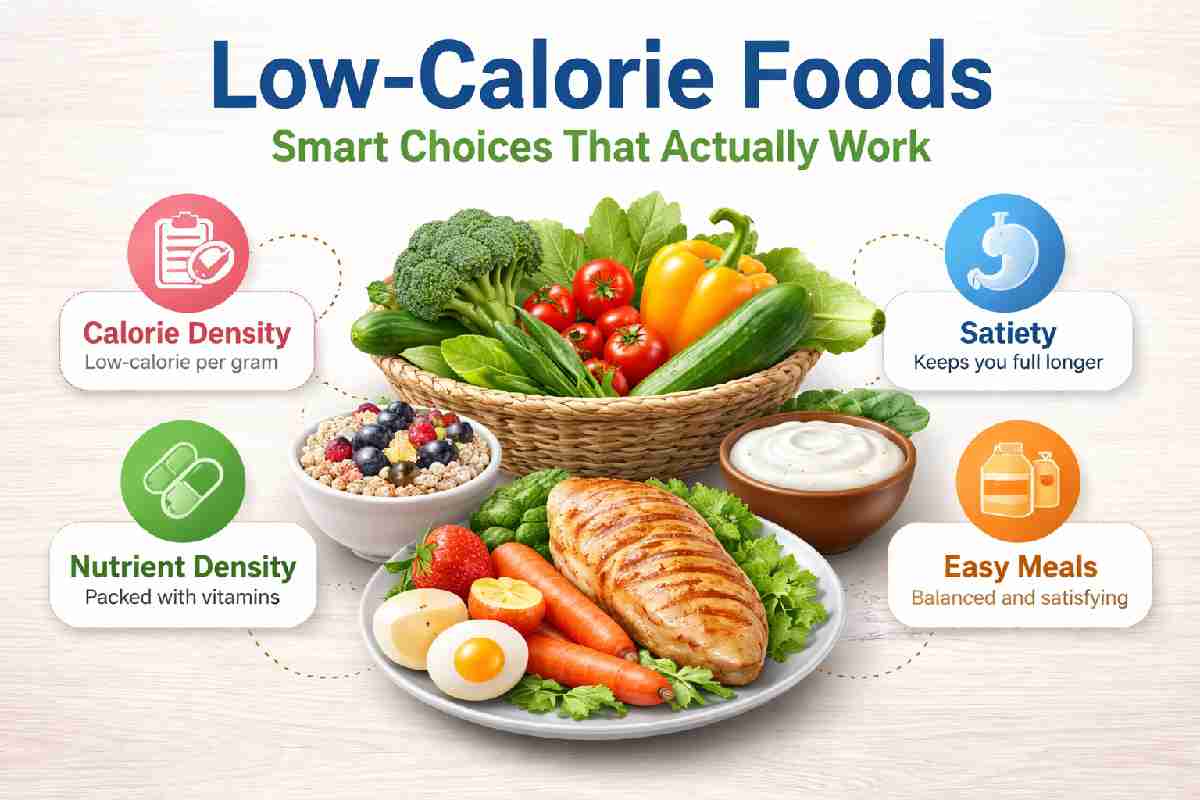
Low-calorie eating only works when foods are selected based on satiety, nutrient density, and sustainability—not just calorie count.
Most people searching for “low calories food” want to lose weight. The problem is: they follow random lists, eat less, and still feel hungry. That leads to cravings, binge eating, and failure.
The real solution isn’t just eating fewer calories—it’s eating foods that control hunger while keeping calories low.
Low calorie foods must be filling to work long-term
Protein and fiber are your biggest advantages
Volume eating only works with structure
Avoid “fake low-calorie” processed foods
Build meals, don’t just pick foods
Low-calorie foods are foods that provide fewer calories per gram.
Examples:
Cucumber, spinach, broccoli
Chicken breast, egg whites
Berries, apples
But here’s the issue:
👉 Eating low-calorie foods alone doesn’t guarantee weight loss.
If those foods don’t keep you full, you’ll eat more later.
Instead of asking “Is this low calorie?”, ask:
👉 “Is this low calorie AND filling?”
| Factor | What It Means | Why It Matters |
|---|---|---|
| Calorie Density | Calories per gram | Lower = better for weight loss |
| Satiety | Fullness level | Prevents overeating |
| Nutrient Density | Vitamins/minerals | Supports health |
Spinach
Cucumber
Zucchini
Cauliflower
👉 High volume, very low calories
Chicken breast
Egg whites
Fish
Greek yogurt
👉 Keeps you full the longest
Watermelon
Strawberries
Apples
👉 Sweet but controlled calories
Oats
Quinoa
Brown rice
👉 Use in moderation for energy
| Food | Calories (100g) | Protein | Fiber | Best Use |
|---|---|---|---|---|
| Chicken breast | ~165 | High | Low | Meals |
| Spinach | ~23 | Low | Medium | Volume |
| Apple | ~52 | Low | Medium | Snacks |
| Oats | ~389 | Medium | High | Breakfast |
Packaged diet snacks
Fruit juices
Flavored yogurt
Low-fat desserts
👉 Problem: They spike hunger quickly.
Vegetables (50%)
Chicken / eggs / tofu
Healthy fats or spices
Grilled chicken (150g)
Stir-fried vegetables
Small portion rice
👉 Balanced, filling, low calorie
| Food | India | US | UK | Australia | Canada |
|---|---|---|---|---|---|
| Chicken | Low | Medium | Medium | High | High |
| Spinach | Low | Low | Medium | Medium | Medium |
| Apples | Low | Medium | Medium | High | Medium |
| Oats | Low | Low | Low | Medium | Medium |
Intermittent fasting
High-protein diets
Portion control
👉 Sometimes easier than strict calorie counting
This guide is based on nutritional science principles such as calorie density, satiety research, and real-world diet adherence patterns commonly discussed by organizations like Harvard T.H. Chan School of Public Health and WHO.
Protein-rich foods like chicken breast and eggs are best because they keep you full longer.
No. Even low-calorie foods can lead to weight gain if eaten excessively.
Yes, especially berries and apples, but portion control still matters.
Because you may be eating low satiety foods instead of protein and fiber-rich foods.
No, but portion size is important. Combine it with protein and vegetables.
Water, black coffee, and unsweetened tea are best.
Only if balanced with nutrients. Extreme restriction is not sustainable.
It depends on your preference. The best diet is the one you can stick to.




Sign up to receive exclusive content updates, fashion & beauty tips!

Copyright © 2025 All Rights Reserved By Health Glowera