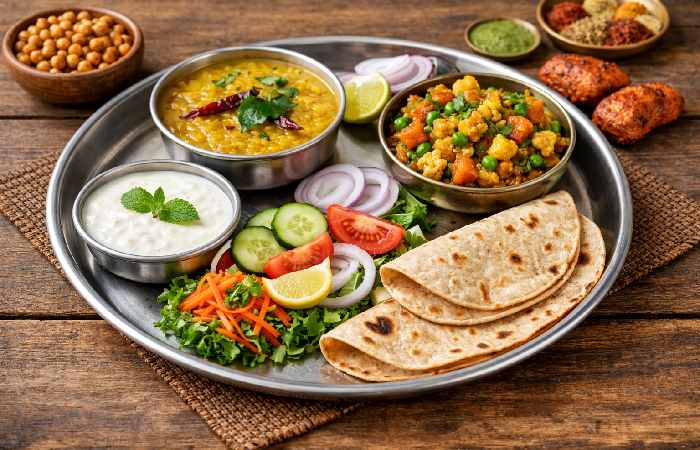
If you’re searching for low calorie Indian foods, chances are you want to eat lighter without living on boring diet food.
The good news? Indian cuisine already has plenty of naturally healthy meals. The problem is not always the food itself — it’s often the portion size, cooking style, extra oil, fried add-ons, and calorie-heavy sides that quietly push meals into weight-gain territory.
Here’s the simplest way to think about it:
Low calorie Indian foods are meals or ingredients that give you good fullness, nutrition, and flavor without packing too many calories into one serving.
That means the best choices are usually foods with:
This guide breaks down the best low calorie Indian foods, what to eat more often, what to be careful with, and how to build meals that actually work in real life.
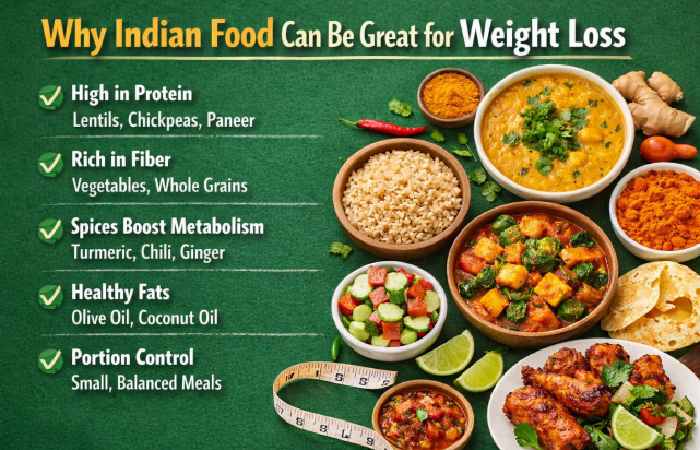
A lot of people assume Indian food is automatically “too oily” or “too heavy” for weight loss.
That’s only partly true.
Traditional Indian home cooking often includes:
That’s actually a strong base for a healthy eating pattern.
The issue usually starts when meals become:
In other words, Indian food is not the problem — modern eating habits often are.
This list of low calorie Indian foods is especially useful if you are:
It’s also useful if you’re tired of hearing that healthy eating means only:
You can absolutely eat proper Indian meals and still stay in a calorie deficit.
Even healthy low calorie foods may need some adjustment if you:
For example:
So the goal is not just low calorie. The goal is balanced and sustainable.
Below are some of the best options you can include regularly.
A high-protein, filling breakfast or light dinner made from soaked moong dal.
Why it works:
Best tip: Add grated carrot, spinach, onion, or paneer filling.
A lighter South Indian option when made with more vegetables and less oil.
Why it works:
Watch out for: Too much oil, peanuts, or large servings.
One of the best naturally light Indian foods.
Why it works:
Best pairing: Sambar instead of too much coconut chutney.
A very underrated low-calorie Indian food.
Why it works:
Sambar is one of the smartest foods to include if you want a meal to feel bigger without adding too many calories.
Poha can be light and filling if made correctly.
Why it works:
Watch out for: Extra sev, peanuts, sugar, or too much oil.
Plain curd is one of the easiest foods to include in a weight-loss-friendly Indian meal.
Why it works:
Choose plain unsweetened curd, not flavored or sugary versions.
Khichdi is often seen as “sick food,” but it can be one of the best comfort meals for healthy eating.
Why it works:
Best version: Moong dal vegetable khichdi with minimal ghee.
Bottle gourd is very low in calories and high in water.
Why it works:
Ridge gourd is another smart choice if you want volume without heaviness.
Why it works:
A very useful low-calorie side dish.
Why it works:
| Food | Why It Works |
|---|---|
| Idli | Steamed and light |
| Moong dal chilla | High protein |
| Poha | Easy and satisfying |
| Vegetable upma | Good for portion control |
| Pesarattu | Great fullness |
| Food | Why It Works |
|---|---|
| Dal + sabzi + phulka | Balanced and practical |
| Khichdi | Light and filling |
| Rajma + salad | Good fiber |
| Lauki sabzi + curd | Low calorie and cooling |
| Tandoori chicken + veg | High protein |
| Food | Why It Works |
|---|---|
| Roasted chana | Crunchy and filling |
| Sprouts chaat | Better than fried snacks |
| Boiled eggs | High satiety |
| Curd bowl | Easy and balanced |
| Kachumber salad | Helps reduce overeating |
A food is usually more weight-loss-friendly when it gives you more fullness per calorie.
That usually comes from:
Choose these more often:
These push calories up fast:
Even healthy foods can become high-calorie meals if portions are large.
Examples:
A low-calorie meal without protein often leads to:
Watch out for:
A few biscuits, namkeen, chips, and tea can quietly add a lot more than expected.
Fact: Rice itself is not the issue. Overeating total calories is.
Fact: Many traditional Indian foods are balanced, high-fiber, and naturally satisfying.
Fact: Roti can fit perfectly into a healthy diet when portions and sides are balanced.
Fact: Dry fruits, peanuts, granola, and “diet namkeen” can still be calorie-dense.
If you don’t want to count every calorie, use this simple structure:
Simple example meals
This is far more realistic than trying to survive on “diet food.”
Moong dal chilla + curd
Fruit or buttermilk
2 phulkas + mixed veg + dal + cucumber salad
Roasted chana + tea without too much sugar
Vegetable khichdi + raita
or
Egg bhurji + sautéed vegetables + 1 phulka
Plain curd or a boiled egg
That’s how you make healthy eating feel normal — not punishing.
Some of the best options include idli, sambar, moong dal chilla, plain dal, vegetable sabzi, khichdi, curd, sprouts chaat, and roasted chana.
Yes. Rice can fit into a weight-loss diet if your portion is reasonable and your meal includes protein and vegetables.
Not always. Both can work. What matters more is portion size, total calories, and what you eat with them.
Good options include idli, vegetable poha, moong dal chilla, upma, and pesarattu.
Yes. Many Indian vegetarian foods like dal, sabzi, curd, sprouts, and chilla are naturally good choices.
Roasted chana, sprouts chaat, boiled eggs, plain curd, fruit, and kachumber salad are all smart snack options.
The biggest mistake people make with low calorie Indian foods is assuming they need to stop eating the food they grew up with.
You don’t.
You just need to eat smarter versions of familiar meals — more dal, more vegetables, better protein, less oil, and more awareness of portions.
That’s what actually works long term.
If you want results, start simple: pick 3 low calorie Indian foods from this list and add them to your weekly routine this week instead of trying to change everything overnight.




Sign up to receive exclusive content updates, fashion & beauty tips!

Copyright © 2025 All Rights Reserved By Health Glowera