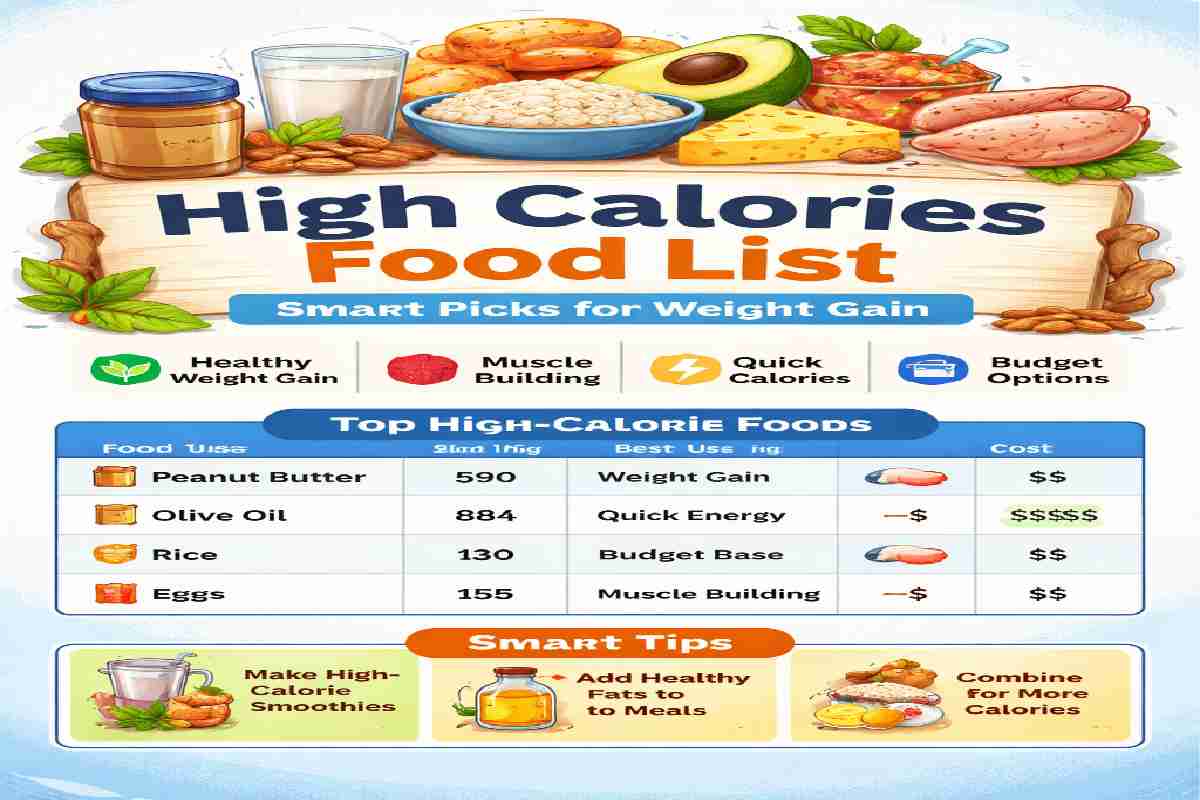
A high calories food list is only useful when paired with strategy—choosing the right foods for your goal and combining them efficiently matters more than calories alone.
Most people searching for high-calorie foods think the solution is simple: eat more. But that usually leads to either unhealthy junk intake or feeling too full too fast. The real problem isn’t lack of food—it’s lack of structure.
The solution: focus on calorie-dense foods and combine them intelligently.
Not all high-calorie foods serve the same purpose
Combining foods increases calorie intake faster
Liquid calories are the easiest way to scale intake
Healthy fats deliver the most calories per gram
Budget foods can still be high-calorie and effective
High-calorie foods are those that provide more energy per gram. Fat-rich foods (like oils and nuts) are the most calorie-dense, followed by carbs and protein.
They matter because:
Weight gain requires a calorie surplus
Athletes need energy for recovery
Busy people need efficient calorie intake
But here’s the catch: eating random high-calorie foods doesn’t guarantee results. Structure matters.
Nuts (almonds, cashews)
Peanut butter
Whole milk
Rice
Bananas
Why: Balanced, easy to digest, sustainable
Eggs
Chicken breast
Salmon
Oats
Whey protein
Why: Combines protein + calories for lean mass
Olive oil (1 tbsp = ~120 kcal)
Cheese
Smoothies
Dark chocolate
Why: Fast calorie boost without large portions
Rice
Potatoes
Lentils
Eggs
Why: Cheap, accessible, effective
| Food | Calories (100g) | Best Use | Pros | Cons |
|---|---|---|---|---|
| Peanut Butter | ~590 | Weight gain | Cheap, dense | Easy to overeat |
| Olive Oil | ~884 | Quick calories | Highest density | No protein |
| Rice | ~130 | Base meals | Affordable | Low density alone |
| Eggs | ~155 | Muscle gain | Balanced nutrition | Requires cooking |
| Cheese | ~400 | Snacks | Tasty, dense | High fat |
| Country | Rice (1kg) | Eggs (12) | Milk (1L) |
|---|---|---|---|
| India | ₹60–₹80 | ₹70–₹90 | ₹50–₹70 |
| US | $2–$4 | $3–$5 | $1–$2 |
| UK | £1–£2 | £2–£3 | £1–£1.5 |
| Australia | $2–$3 | $4–$6 | $1.5–$2 |
| Canada | $2–$4 | $3–$5 | $1.5–$2 |
Insight: Budget foods like rice and eggs dominate globally.
Instead of eating foods separately, combine them:
Example 1:
Rice + chicken + olive oil = 2x calories instantly
Example 2:
Milk + peanut butter + banana = 600–800 kcal smoothie
Rule: Add fats to carbs → fastest calorie increase
Breakfast: Oats + milk + banana
Lunch: Rice + dal + eggs
Dinner: Chicken + rice
Add smoothies
Add oil to meals
Include snacks (nuts, peanut butter)
Rice + lentils
Milk smoothies
Peanut butter sandwiches
Bar Graph:
Oil > Nuts > Cheese > Rice
Pie Chart:
50% carbs
30% fats
20% protein
Track your calorie intake
Use liquid calories
Combine foods
Rely on junk food
Ignore protein
Skip meals
Vegan: almond butter, tofu
Lactose-free: soy milk
Budget: potatoes, lentils
This content aligns with general nutrition principles from:
Harvard T.H. Chan School of Public Health
WHO dietary guidelines
Mayo Clinic nutrition insights
Foods like oils, nuts, and peanut butter are the highest because they are rich in fats, which provide 9 calories per gram.
Use calorie-dense additions like oils, nut butter, and smoothies. These increase intake without increasing volume.
Not necessarily. Whole foods like nuts, milk, and rice are healthy. Junk food becomes unhealthy when overused.
Peanut butter and smoothies are among the best because they are dense, affordable, and easy to consume.
Yes. Foods like lentils, rice, nuts, and dairy provide enough calories and nutrients.
Typically 300–500 extra calories above maintenance is recommended for gradual weight gain.




Sign up to receive exclusive content updates, fashion & beauty tips!

Copyright © 2025 All Rights Reserved By Health Glowera