
If you searched “bilastine and montelukast tablet uses”, you probably want a simple answer: What is this tablet for, and should I take it?
Here’s the short version:
Bilastine and montelukast tablets are mainly used for allergy symptoms—especially allergic rhinitis—and in some people, they may also help with hives or allergy-linked breathing symptoms.
That’s the official-style answer.
But it’s not the useful answer.
The useful answer is this: this combination is not a “one tablet for all allergies” solution. It works well in the right situation, but it is often used too casually in India for dust allergy, seasonal sneezing, sinus-type symptoms, and even coughs that may not need it.
So let’s break it down properly.
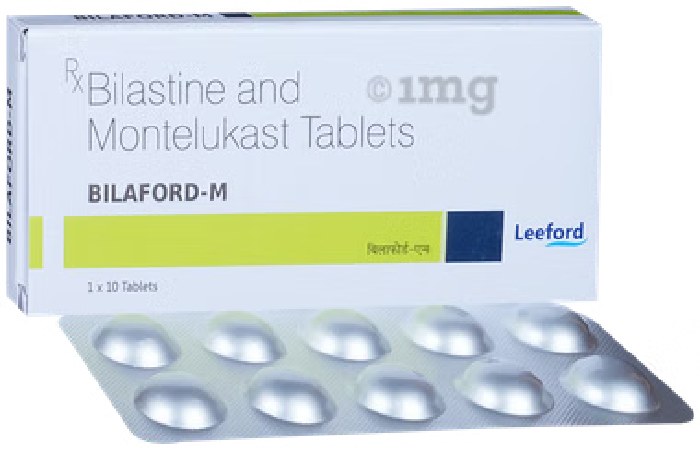
Bilastine and montelukast is a combination anti-allergy medicine.
It contains:
That is why the tablet is often prescribed when allergy symptoms are more than just mild sneezing—especially when there is nasal blockage, repeated allergy flare-ups, or nighttime symptoms.
This is the section most people want first.
This is the main use of bilastine and montelukast tablets.
In India, many people get this prescription for:
Bilastine controls the histamine symptoms like itching and sneezing.
Montelukast may help when there is nasal inflammation, congestion, or an allergy pattern that keeps returning.
Doctors may also use the bilastine component for:
Bilastine has evidence for allergic rhinitis and chronic urticaria, and meta-analyses have found it improves symptoms compared with placebo while remaining generally well tolerated.
For hives, bilastine alone is often the more central medicine.
Montelukast is sometimes added, but it is not automatically needed in every patient.
That distinction is missing from many thin medicine pages.
Some doctors prescribe this combination when allergy symptoms are associated with:
This is where montelukast becomes more relevant.
But here’s the truth:
If someone has:
they need a proper evaluation—not just an “allergy tablet.”
Bilastine and montelukast tablets may make sense for people who have:
A person who:
may benefit more than someone who just sneezes once in a while.
That difference matters.
This part is often buried. It shouldn’t be.
You should be more careful if you have:
Because montelukast is not a harmless add-on for everyone.
Some patients tolerate it well. Others do not.
And that brings us to the most important part of this article.
Most medicine pages just say “it treats allergy.” That’s too vague.
Here is the useful explanation:
If your symptoms are mostly:
then sometimes bilastine alone may be enough.
But if you have:
your doctor may prefer the combination.
That’s the clinical logic.
| Symptom / Condition | Bilastine Alone | Bilastine + Montelukast |
|---|---|---|
| Sneezing | Good | Good |
| Itchy nose / eyes | Good | Good |
| Runny nose | Good | Good |
| Nasal congestion | Moderate | Often better fit |
| Recurrent allergy flares | Moderate | Often more useful |
| Hives (urticaria) | Often enough | Sometimes used |
| Allergy + mild wheeze history | Limited | More relevant |
| Mild occasional allergy | Often enough | May be unnecessary |
The combination is often more useful when allergy is persistent or layered, not just occasional.
Now the part people should read before they start it.
Some people feel perfectly fine on it. Others feel “off” but don’t connect it to the tablet.
That is why you should know what to watch for.
This is the biggest content gap on most competitor pages.
That can include, in some people:
Not everyone gets these side effects. Many people do fine.
But this is not a tablet to take casually forever just because you sneeze in the morning.
In real life, many patients are given montelukast combinations repeatedly for:
Sometimes that is reasonable. Sometimes it is simply overused.
Community discussions also show that side effects—especially around mood or sleep—are a real concern for some users, even though anecdotal experiences vary and are not the same as clinical evidence.
Bilastine is often advised on an empty stomach because food can affect absorption. Exact instructions depend on the brand and doctor’s advice, so always follow the label.
That one detail alone is often skipped in low-quality articles.
Not every allergy needs a combination tablet.
If you have been taking it for months, ask why.
If your room has:
the tablet is only doing half the job.
If you feel:
do not just “wait it out” for weeks.
Fact: It can be helpful, but the montelukast part deserves proper caution.
Fact: Repeated self-use is not the same as correct long-term management.
Fact: Sometimes the simpler medicine is the better medicine.
That’s a more useful principle than many ranking pages offer.
Bilastine + montelukast combinations are widely available in India under multiple brands.
Based on recent Indian pharmacy listings, branded combinations commonly fall around ₹105 to ₹187 depending on brand and pack details.
Do not choose only by:
Choose based on:
So, what is the honest answer?
Bilastine and montelukast tablet uses mainly include allergic rhinitis and selected allergy-related symptoms—but it is not the best or safest “default” tablet for everyone with sneezing.
It can be genuinely useful when:
But if your symptoms are mild, occasional, or you are getting side effects, it may not be the smartest long-term option.
The right next step is simple:
use it with a clear reason, not just because it was prescribed once before.
They are mainly used for allergic rhinitis—symptoms like sneezing, runny nose, itchy nose, watery eyes, and sometimes nasal blockage.
Sometimes doctors use it when cough seems linked to allergy or post-nasal drip, but it is not a universal cough medicine.
Only if your doctor has advised it. It should not be taken casually for long periods without review.
It can in some people, although bilastine is generally considered a less-sedating antihistamine. Individual response varies.
Yes, it is often prescribed for dust allergy symptoms, especially if they are frequent or disruptive.
No. People with a history of mood, anxiety, or sleep issues should be especially cautious because of the montelukast component.
That depends on your symptoms. Bilastine alone may be enough for mild histamine-driven symptoms, while the combination may be more useful for more persistent or congestion-heavy allergy patterns.




Sign up to receive exclusive content updates, fashion & beauty tips!

Copyright © 2025 All Rights Reserved By Health Glowera