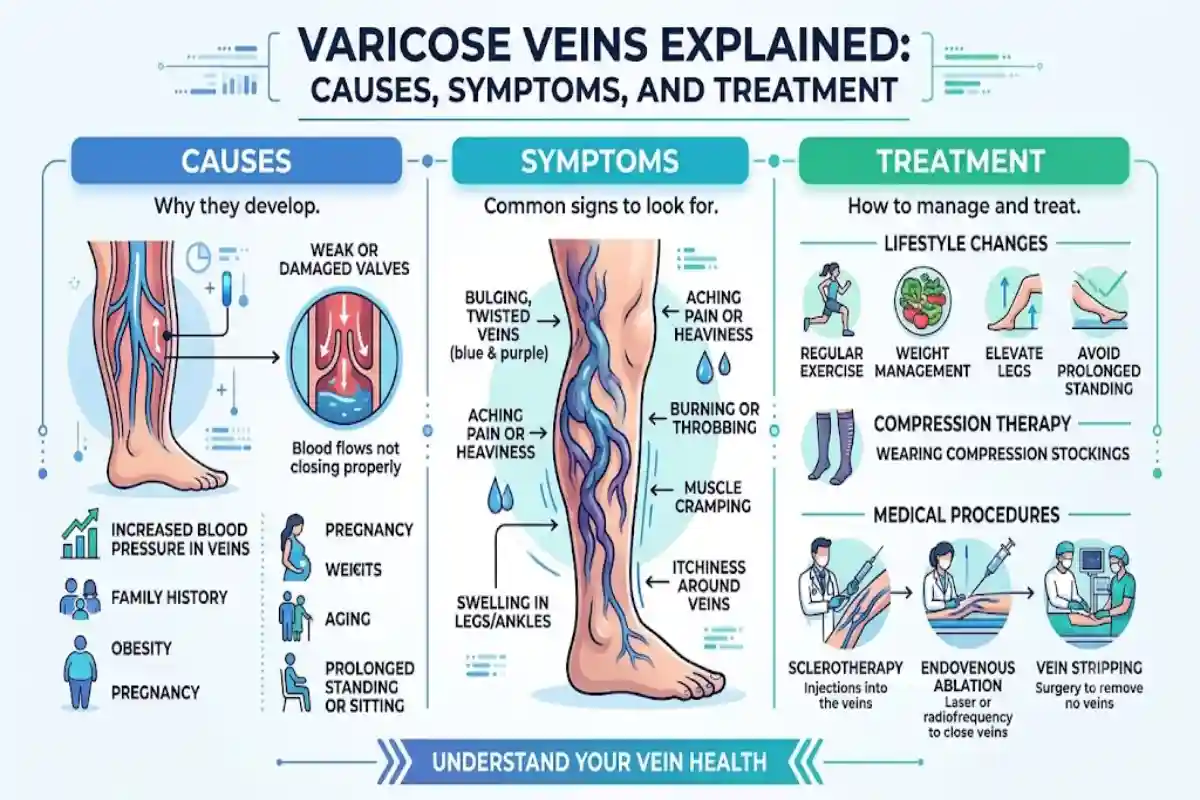
Varicose veins are often noticed when blue, purple, or twisted veins become visible beneath the skin, particularly around the calves, ankles, and thighs. Some people consider them a cosmetic concern, while others experience aching, heaviness, swelling, or discomfort that becomes more noticeable after a long day on their feet.
Although varicose veins are common, many people are unsure why they develop, whether they indicate an underlying health problem, or which treatments are available. Understanding how veins work can make it easier to recognize possible warning signs and decide when professional advice may be appropriate.
For people experiencing persistent symptoms, learning about effective vein treatment from Voorhees specialists can be a useful starting point for exploring professional evaluation and individualized care.
Varicose veins do not always cause serious complications, and not everyone with visible veins needs treatment. However, persistent discomfort, skin changes, or swelling should not automatically be dismissed as a normal part of aging. Knowing the causes, symptoms, and treatment options can help people make informed decisions about their vein health.
Veins carry blood back toward the heart. In the legs, this process requires blood to travel upward against gravity. Small one-way valves inside the veins help keep blood moving in the correct direction and prevent it from flowing backward.
When these valves weaken or stop functioning properly, some blood can flow backward and collect in the veins. The resulting increase in pressure can cause the veins to enlarge, twist, and become visible beneath the skin. These enlarged veins are known as varicose veins.
They are different from spider veins, which are smaller, thin blood vessels that often appear as red, purple, or blue lines near the surface of the skin. Spider veins are frequently a cosmetic concern, whereas varicose veins may be associated with symptoms or underlying chronic venous disease.
The appearance of a vein alone does not reveal the full condition of the circulatory system. A healthcare professional can evaluate symptoms and determine whether further testing is needed.
Varicose veins usually develop through a combination of factors rather than from one single cause. Genetics can play a significant role. People whose parents or close relatives have varicose veins may be more likely to develop them because inherited characteristics can influence vein structure and valve function.
Age is another important factor. As people grow older, the walls and valves of their veins may become less effective at maintaining normal blood flow. This does not mean varicose veins are inevitable, but it helps explain why they become more common with age.
Pregnancy can also contribute to vein changes. During pregnancy, blood volume increases, hormonal changes affect blood vessel walls, and the growing uterus places additional pressure on veins in the pelvis. Some varicose veins improve after childbirth, while others remain.
Body weight, prolonged standing, and limited movement may also influence symptoms and pressure within the leg veins. Jobs that require people to remain standing or sitting for long periods can make leg discomfort more noticeable, although these factors do not necessarily cause varicose veins on their own.
Hormonal influences may contribute to vein changes as well. Varicose veins are more common in women, and hormonal changes associated with pregnancy, menopause, and certain hormonal medications may affect individual risk.
Understanding these factors can help people recognize their potential risk, but there is no single lifestyle habit that can guarantee prevention.
Visible, enlarged veins are the best-known sign of varicose veins, but symptoms can extend beyond appearance. Some people experience aching, throbbing, burning, or a feeling of heaviness in the legs. Others notice itching around affected veins, muscle cramps, or swelling near the ankles.
Symptoms may become more noticeable after standing or sitting for extended periods and may improve when the legs are elevated or after walking. The pattern varies from person to person, and symptoms alone cannot confirm a diagnosis.
In more advanced cases of venous disease, the skin around the lower legs or ankles may become discolored, dry, irritated, or thickened. Some people develop wounds near the ankles that heal slowly. These changes deserve medical evaluation because they can indicate a more significant circulation problem.
It is also important to remember that leg pain and swelling can have causes unrelated to varicose veins. A clinician can assess the overall picture rather than assuming every symptom is due to visible veins.
Many varicose veins remain relatively stable for years, but some are associated with complications. Increased pressure in the affected veins can contribute to swelling, inflammation, skin changes, and, in advanced cases, venous ulcers.
Superficial veins may sometimes develop inflammation and blood clots, a condition known as superficial thrombophlebitis or superficial vein thrombosis. Bleeding can also occur if a varicose vein close to the skin is injured.
Varicose veins are not the same as deep vein thrombosis, which involves a blood clot in a deeper vein. However, new or sudden swelling in one leg, especially when accompanied by pain, warmth, or redness, requires urgent medical assessment because a deep vein clot is one possible cause.
If leg symptoms occur alongside sudden shortness of breath, chest pain, fainting, or coughing up blood, seek emergency medical care immediately.
Recognizing these warning signs is more useful than focusing on the appearance of veins alone.
A professional evaluation generally begins with a discussion of symptoms, medical history, family history, and factors that may influence vein health. The clinician may examine the legs while the patient is standing or sitting to assess visible veins, swelling, skin changes, and areas of discomfort.
When indicated, a duplex ultrasound may be used to evaluate blood flow and check how well the vein valves function. This noninvasive test can help identify backward blood flow, known as reflux, and determine which veins are contributing to the problem.
The findings help guide treatment decisions. Some people may need only reassurance and symptom management, while others may benefit from a procedure to address an affected vein.
An accurate assessment is important because treatment should be based on the underlying condition, the severity of symptoms, and the patient’s individual circumstances rather than appearance alone.
Treatment depends on the type of vein involved, symptom severity, ultrasound findings, medical history, and personal goals. Modern vein care offers several options, many of which can be performed without traditional open surgery.
For people with mild symptoms, regular movement, walking, and avoiding prolonged periods in one position may help manage discomfort. Elevating the legs when resting can also reduce swelling for some individuals.
Compression stockings apply graduated pressure to the legs and may help improve venous return and reduce swelling or aching. The appropriate compression level depends on individual circumstances, so it is best to seek professional guidance before using them, particularly when arterial circulation problems are possible.
These approaches can help control symptoms, but they do not repair damaged vein valves or eliminate established varicose veins.
Sclerotherapy involves injecting a medical solution into selected veins, causing them to close over time. Blood is then redirected through other functioning veins. It is commonly used for spider veins and certain smaller varicose veins.
The number of treatments required depends on the veins being treated and the individual’s response. A specialist can explain the likely benefits, limitations, and possible side effects.
Endovenous laser ablation and radiofrequency ablation are minimally invasive procedures used to close certain diseased veins from within. A clinician guides a thin catheter into the targeted vein and uses heat to seal it.
Blood then flows through healthier veins. These procedures are often performed using local anesthesia, and many patients can return to light daily activities relatively quickly, although recovery recommendations vary.
Depending on the anatomy and condition of the affected veins, treatment may involve medical adhesives, specialized injection techniques, or small-incision procedures to remove selected varicose veins. Traditional surgery is still appropriate in some circumstances, but the best option depends on the individual assessment.
No single treatment is right for everyone. A vein specialist can explain expected outcomes, potential risks, aftercare, and the possibility that additional treatment may be needed.
People who experience recurring leg discomfort, swelling, or visible varicose veins may benefit from an evaluation by a qualified vein specialist. Professional care can help clarify whether the symptoms are caused by venous reflux, another circulatory issue, or an unrelated condition.
Vein & Vascular Institute’s Voorhees location provides evaluations and personalized treatment options for varicose veins, spider veins, and chronic venous insufficiency. Its care team offers diagnostic assessment and minimally invasive procedures when appropriate.
During a consultation, patients can discuss their symptoms, ask whether ultrasound testing is recommended, and understand which treatment approaches may suit their needs. It is also an opportunity to discuss recovery expectations, follow-up care, and how treatment fits into everyday life.
Seeking advice does not automatically mean a procedure is necessary. The purpose of an evaluation is to understand the condition and make an informed decision about the next step.
Varicose veins are common, but their effects can range from a minor cosmetic concern to persistent discomfort and complications associated with chronic venous disease. Genetics, age, pregnancy, and other factors can contribute to their development, making it important to understand both the risk factors and the symptoms.
Regular movement, sensible daily habits, and appropriate symptom management can support general leg health. However, persistent pain, swelling, skin changes, or wounds should be assessed by a healthcare professional rather than managed indefinitely at home.
With a proper diagnosis and a treatment plan tailored to individual needs, many people have options for managing symptoms and addressing problematic veins. Understanding those options is the first step toward making confident decisions about long-term vein health.




Sign up to receive exclusive content updates, fashion & beauty tips!

Copyright © 2026 All Rights Reserved By Health Glowera