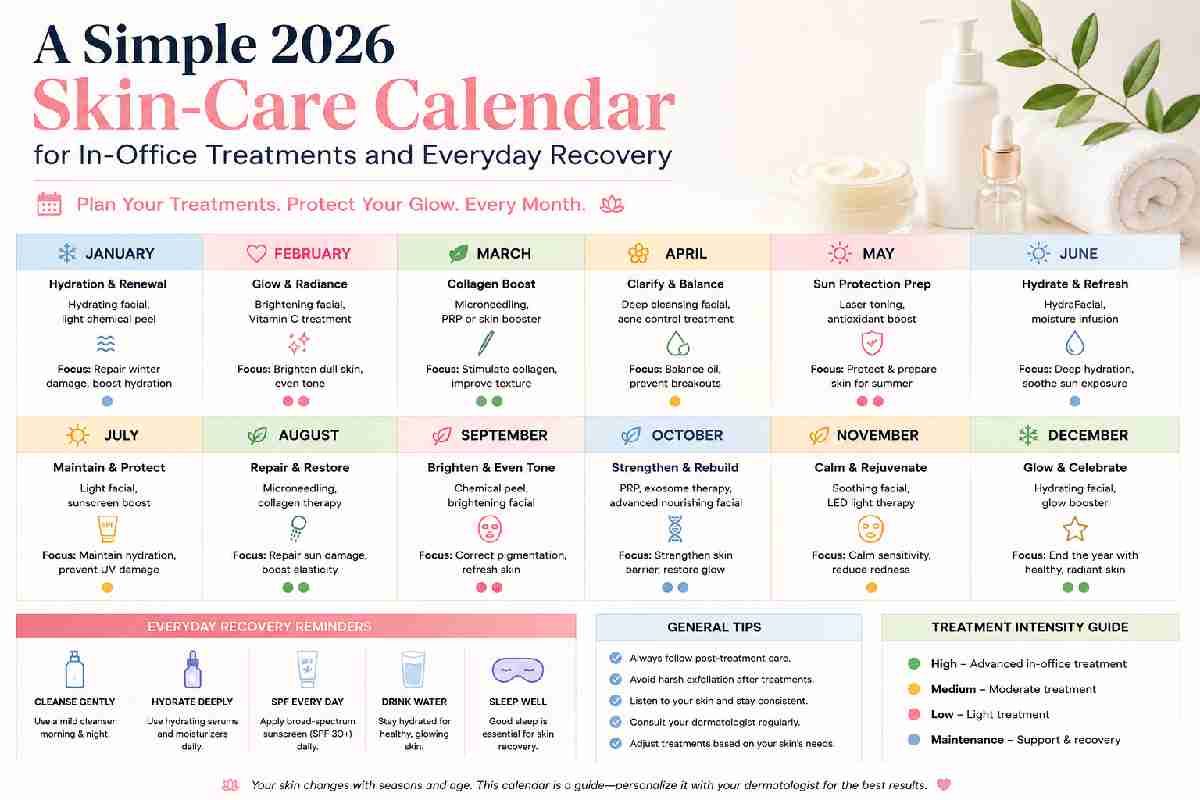
It is easy to book a facial, peel, injectable appointment, or laser service before a wedding, vacation, or work event and forget to leave room for recovery. A thoughtful plan begins well before treatment day. For readers comparing a med spa Parker, CO, option, Aesthetics 360 Lash & MedSpa offers consultations and a broad range of aesthetic services, including injectables, customized facials, laser treatments, and skin resurfacing. Its team of Nurse Practitioners, Medical Assistants, and Licensed Medical Estheticians serves Parker and nearby communities, including Castle Rock and Lone Tree, making individualized treatment planning central to the conversation.
A skin-care calendar helps separate the process into manageable phases: preparation, treatment day, early recovery, and a gradual return to regular products. This guide provides general education, not personal medical advice. The right timing and aftercare plan should always reflect the procedure, your skin history, medications, allergies, and provider instructions.
Choose one primary goal before changing your routine or scheduling a service. That goal might be improved hydration, smoother-looking texture, more even tone, fewer visible lines, or help with breakouts. Trying to correct every concern at once often leads to unnecessary product layering and makes it harder to tell what your skin tolerates well. For example, someone with dry, reactive skin may decide to focus on hydration and barrier support first. Once the skin feels calm and stable, a provider may suggest a treatment or a stronger corrective product. This step-by-step approach can be easier to follow than introducing acids, retinoids, masks, and new treatments all in the same week.
Professional facials can also complement a consistent home routine by addressing specific skin concerns. Learn more about why facials should be part of your skincare routine and how personalized treatments can support long-term skin health.
Use the two weeks leading up to an appointment to review your current routine. Tell the provider about medications, supplements, allergies, active acne, eczema, a history of cold sores, recent procedures, tanning, and any past reactions. Bring a written list or photos of the products you use, especially retinoids, exfoliating acids, benzoyl peroxide, brightening treatments, and fragranced products. Avoid last-minute experiments. A new scrub or potent serum may irritate right before an appointment, leaving the provider to decide whether treatment should be postponed. Preparation differs substantially between injectables, facials, chemical peels, microneedling, and laser procedures, so do not assume that a friend’s instructions apply to you.
Arrive with clean skin when instructed and provide a complete, accurate health history. Ask about normal sensations during the procedure, expected redness or swelling, likely downtime, makeup limits, exercise restrictions, and when you can restart your usual products. Written aftercare instructions are especially useful when you are tired, excited, or distracted after an appointment.
The first day after treatment is usually not the time to test a new recovery mask or add several “healing” products. Follow the provider’s directions about cleansing, moisturizing, makeup, touching the area, heat exposure, and exercise. Depending on the procedure, you may be asked to avoid heavy sweating, hot showers, saunas, direct sun, or unnecessary rubbing. Gentle care matters because recently treated skin can be more sensitive than usual. Dermatology guidance on the importance of individualized aftercare and sunscreen after skin treatment confirms this principle. Use only the cleanser, moisturizer, ointment, or recovery product that your provider has approved for this stage.
Early recovery can involve dryness, tightness, mild redness, sensitivity, or light flaking. These changes can be normal for some procedures, but peeling skin should not be picked, scrubbed, or pulled away. A calm routine is often more helpful than a long list of products. If progress tracking is recommended, take a daily photo in the same location and under the same lighting.
Retinoids, exfoliating acids, scrubs, benzoyl peroxide, and strong brightening products can irritate healing skin. The restart date depends on whether the procedure disrupted the skin barrier, how your skin looks and feels, and the provider’s protocol. Bring your product list to a follow-up visit if you are unsure. Recent expert discussion of phase-specific skin care around aesthetic procedures highlights why barrier-supporting ingredients may be more appropriate during the immediate recovery phase, while potentially irritating actives are often reserved for later. “Later” is not a universal date, so provider guidance still comes first.
Treated skin may be more reactive to sunlight and visible light. Broad-spectrum sunscreen, a hat, shade, and reduced direct exposure can be especially important after procedures that create redness, peeling, or sensitivity. Consistent protection may also help limit lingering discoloration after certain treatments. Consider your real schedule: a hiking weekend, beach trip, outdoor sports event, or patio brunch can affect when treatment makes sense.
When your provider approves moisturizing products, understanding the ingredients can help you choose suitable options for your routine. Read our comparison of hyaluronic acid vs. other hydrating ingredients to learn how different ingredients support skin hydration.
Your skin’s hydration and sensitivity can also change with temperature, humidity, and seasonal conditions, so explore our guide on how to maintain radiant-looking skin as seasons change for practical ways to adjust your routine throughout the year.
Do not schedule an unfamiliar treatment immediately before a major event. Swelling, bruising, peeling, redness, and delayed results can all affect your timeline. A practical calendar looks like this:
Ask who will perform the treatment, whether they are licensed to perform it, which products or devices will be used, what outcomes are realistic, and how follow-up care will work. Good consultations also include a discussion of sanitation, contraindications, potential side effects, and what to do if a concern arises after the appointment. Mild, short-term redness or swelling may be expected after some services. Contact the treating provider if symptoms worsen, spread, become increasingly painful, or last beyond the recovery window you were given. Seek urgent medical attention for severe pain, major swelling, blistering, signs of infection, trouble breathing, or vision changes. Social media advice is not a substitute for professional evaluation when a reaction seems unusual.
It depends on the treatment and your skin’s recovery. Restart products only when your provider says it is appropriate.
Sometimes, but spacing may be needed to protect the skin, reduce irritation, and accurately assess results.
Use the approved recovery routine and contact the provider before adding a new active product.
Effective skin care does not need to be complicated. Set one clear goal, allow adequate time before important events, keep recovery gentle, protect your skin from the sun, and communicate openly with a qualified provider. The best calendar is one that fits your skin, health needs, comfort level, and real-life schedule.
A successful aesthetic treatment plan depends as much on preparation and aftercare as the procedure itself. Keeping your routine simple, protecting the skin barrier, using daily sun protection, and following provider-specific instructions can support a smoother recovery. Planning treatments well ahead of important events also gives your skin time to heal and results time to develop. When in doubt, consult the treating provider before restarting active products or adding new treatments, and seek prompt professional attention for unusual or worsening symptoms.




Sign up to receive exclusive content updates, fashion & beauty tips!

Copyright © 2026 All Rights Reserved By Health Glowera