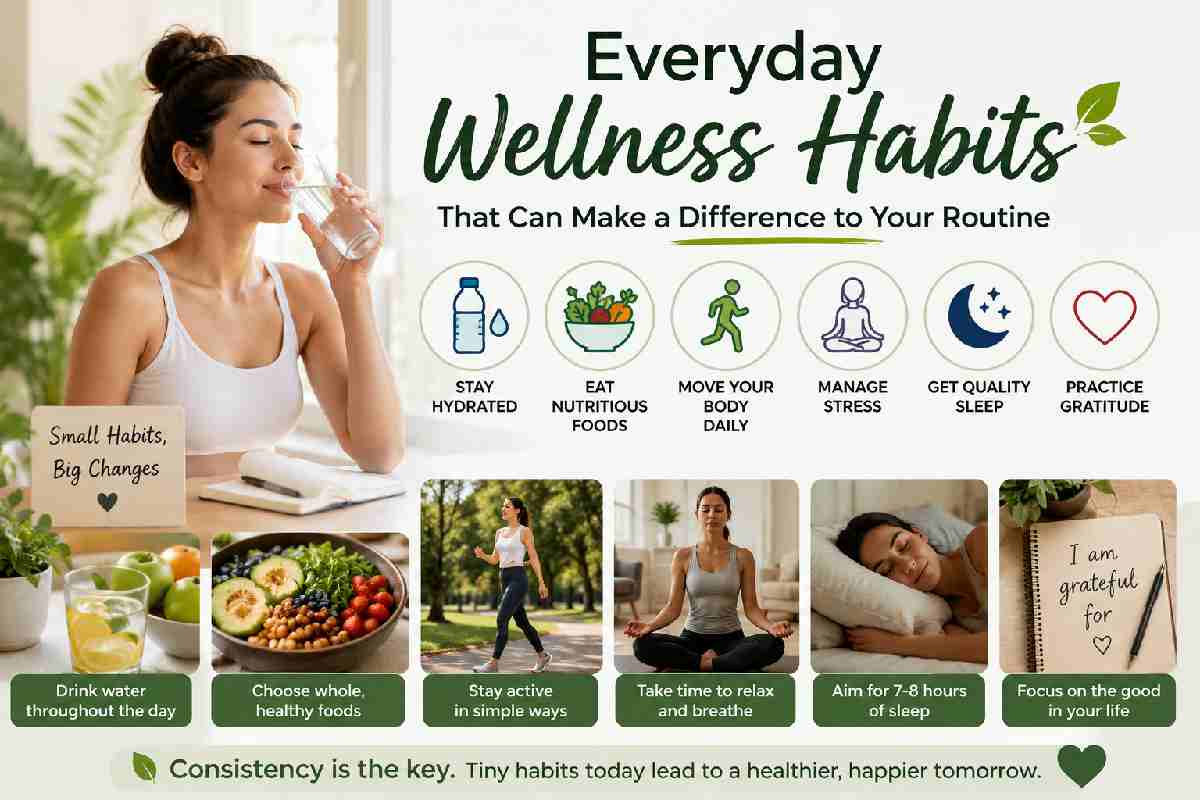
Incorporating simple wellness habits into your daily routine can spark remarkable changes in your life. Whether it’s enhancing your physical health or boosting your mental well-being, small steps can lead to significant improvements. And while you’re at it, don’t miss out on the Just Bee Honey discount voucher for a sweet addition to your routine without hurting your budget.
Start Your Day with Mindful Mornings
How your morning goes tends to leak into everything else. Not in a magical way—just in a practical one. If you start the day rushed, reactive, and already behind, your brain stays in that mode. A mindful morning is basically the opposite: you choose the pace for the first few minutes, so the rest of the day isn’t driving you.
You don’t need a 90-minute “perfect” routine. You need something small you’ll actually repeat.
Keep it simple: 10 minutes is enough
Pick one or two of these and treat them like brushing your teeth—non-negotiable, not dramatic.
- One-minute breathing reset: Sit up in bed or on a chair. Inhale for 4, exhale for 6. Do that 6–8 times. It signals “we’re not in danger,” which is a nice way to start.
- Quick meditation (3–5 minutes): Use a timer. Focus on your breath. When your mind wanders (it will), return to the breath. That’s the whole workout.
- Journal dump (5 minutes): Write whatever’s in your head. No structure needed. If you want structure, use these prompts:
- “Today would feel successful if…”
- “The one thing I’m avoiding is…”
- “Three things I can control today are…”
Set a tone before you open the world
If you do nothing else, try this: don’t touch your phone for the first 15 minutes. Notifications are other people’s priorities. Give yourself a head start before you invite everyone else into your brain.
Use those minutes to do something low-effort but grounding:
- open a window and get daylight on your face
- make your bed (yes, it counts)
- drink a glass of water
- stand and stretch your back/hips/neck
Make it easy to repeat
Mindfulness fails when it becomes a project. Reduce friction:
- Put a notebook and pen where you’ll see it.
- Pre-select a short meditation and save it.
- Decide your “minimum routine” now, not in the morning.
A solid minimum could be: 2 minutes breathing + 5 minutes journaling + phone after. That’s it. Do it consistently, and you’ll notice you’re calmer, clearer, and less likely to spend the rest of the day playing catch-up.
Hydrate, Hydrate, Hydrate
Hydration is one of those boring basics that quietly runs the show. When you’re even a little low on fluids, your energy dips, your focus gets fuzzy, and you might mistake thirst for hunger (hello, random snacking). Water helps regulate body temperature, supports digestion, keeps joints happier, and generally makes your body’s “background processes” run smoother.
The trick isn’t chugging a litre at 9 a.m. and calling it done. It’s steady, low-effort consistency.
How to actually drink enough water (without turning it into a project)
- Start with an easy anchor habit: Drink a glass of water right after you wake up. No motivation required—just attach it to something you already do.
- Keep water visible: If it’s in a cupboard, it doesn’t exist. Leave a bottle on your desk, in your bag, or next to the kettle.
- Use “event-based” reminders: Drink water after you use the bathroom, before each meal, or every time you make tea/coffee.
- Make it taste like something: If plain water feels like punishment, add lemon, cucumber, mint, or a splash of fruit juice. You’re building a habit, not proving toughness.
- Choose a bottle you like using: A decent lid, easy-to-carry size, and something that doesn’t leak. Small upgrades = more sipping.
- Don’t forget foods count too: Soups, fruit (watermelon, oranges), yoghurt, and veg all contribute to hydration.
Quick self-check: are you likely low on fluids?
Common signs: dry mouth, headaches, sluggishness, dizziness, and darker yellow urine. (Not a perfect system, but it’s a solid hint.)
Bottom line: aim for “regular sips all day,” not perfection. Your routine will feel better with almost no extra effort.
Move Your Body Regularly
You don’t need a perfect workout plan, fancy kit, or an hour carved out of your day. You just need movement—often, and in small doses. Daily movement keeps your joints happier, your energy steadier, your mood lighter, and your body a bit more “awake” in general. Think of it less like training and more like maintenance.
Why it matters (without the lecture)
- Better focus and mood: Even a short walk can take the edge off stress and clear mental fog.
- Less stiffness and fewer aches: Regular movement keeps your body from locking up after long sitting spells.
- More energy over time: Counterintuitively, moving more can make you feel less tired.
Keep it simple: the “minimum effective dose”
If “exercise” feels like a big task, swap it for smaller, easier wins:
- 10-minute walk after breakfast or lunch. No pace goals. Just go.
- 5-minute stretch when you wake up or before bed (hips, hamstrings, shoulders—done).
- Movement snacks: 1–2 minutes every hour. Stand up, roll your shoulders, do a few squats, walk to refill water.
Low-friction ideas that don’t feel like workouts
- Take calls while walking.
- Use stairs for one flight, then take the lift if you want.
- Do a quick routine while the kettle boils:
10 squats + 10 wall push-ups + 20-second plank (repeat once if you’re feeling it).
- Put on one song and dance/stretch for the whole track. Yes, it counts.
Make it manageable, not heroic
The goal isn’t to go hard; it’s to show up consistently. Start with something you can repeat on your worst day. Once that habit’s locked in, you can add time, intensity, or variety—but not before.
Daily movement is one of those boring habits that quietly upgrades everything else. Keep it small, keep it regular, and let the results stack up.
Nourish Yourself with Balanced Meals
A balanced diet isn’t about eating “perfect.” It’s about giving your body steady fuel so you’re not running on fumes by 3 p.m. When meals have a mix of protein + fibre-rich carbs + healthy fats + colour (fruit/veg), you tend to get better energy, fewer random cravings, and a more stable mood. Simple, unsexy, effective.
What “balanced” looks like (without overthinking it)
Use this as an easy mental template:
- Half your plate: vegetables (or veg + fruit if that’s what you’ve got)
- Quarter: protein (eggs, chicken, fish, tofu, beans, Greek yogurt)
- Quarter: carbs with fibre (rice, potatoes, oats, wholegrain bread, quinoa)
- Add a little fat: olive oil, avocado, nuts, seeds, cheese—keeps you full and helps absorption of vitamins
No measuring. No apps required.
Low-effort meal planning that actually sticks
Meal planning fails when it’s too ambitious. Keep it simple:
- Pick 2–3 repeatable breakfasts
- Overnight oats + berries + nut butter
- Eggs + toast + spinach
- Greek yogurt + banana + granola
- Batch-cook one “base” per week
- A tray of roasted veg
- A pot of rice/quinoa
- A protein you can remix (chicken thighs, lentils, tofu, mince)
- Build mix-and-match lunches/dinners
- Bowl: grain + protein + veg + sauce
- Wrap: protein + crunchy veg + hummus
- Stir-fry: frozen veg + protein + noodles/rice
- Keep “backup meals” for chaotic days
- Tinned soup + wholegrain bread
- Frozen veg + dumplings
- Beans on toast + side salad
- Omelette with whatever is in the fridge
Smart snacks that don’t spike and crash
If you snack, make it count:
- Apple + peanut butter
- Carrots + hummus
- Handful of nuts + fruit
- Cheese or yogurt + berries
- Crackers + tuna or mashed chickpeas
The goal: protein or fibre included, so it actually holds you over.
One realistic rule to follow
Aim for “good most days”, not “perfect every day.” If you can consistently get some protein, some plants, and decent hydration on board, you’re already doing the thing that moves the needle.
Foster Social Connections
Humans aren’t built to run solo 24/7. Strong relationships act like mental health scaffolding: they buffer stress, keep you grounded, and give you a place to land when life gets noisy.
Keep It Simple: Consistency Beats Intensity
This doesn’t have to mean a packed social calendar. The goal is regular, reliable connection—not constant socializing.
Practical Ways to Stay Connected (Even When You’re Busy)
1) Schedule Connection Like Anything Else
Treat it like a non-negotiable appointment:
- A 15-minute weekly call
- A recurring coffee every other Saturday
- A standing “walk and chat” with a friend
- Put it in the calendar. Done.
2) Use “Micro-Connection” on Hectic Days
Small touches still count:
- A quick voice note
- A basic check-in text (“How’s your week really going?”)
- Sending a meme with an actual sentence attached
3) Stack Social Time Onto What You Already Do
Pair connection with existing routines:
- Gym session with a buddy
- Cooking dinner together
- School pickup chats
- A shared commute
- A weekly grocery run followed by tea
4) Make the Default Low-Effort
Swap vague plans for clear options:
- Instead of: “We should catch up sometime”
- Try: “Free Tuesday or Thursday evening for a quick walk?”
5) Join Something Repeatable
Regular groups make connection automatic (and reduce planning fatigue):
- Clubs or classes
- Volunteering
- Community sports
- Book groups
- Anything that meets consistently
If You Feel Isolated, Start Smaller Than You Think
Start with:
- One person
- One recurring touchpoint
The goal isn’t to be social nonstop—it’s to have a few reliable threads of connection running through your week.
Practice Gratitude
Gratitude isn’t about pretending everything’s fine. It’s more like training your brain to notice what’s working, even when life’s messy. When you regularly name the good stuff—small wins, kind people, your own progress—you shift your default setting from “what’s missing” to “what’s here.” That change alone can lighten your mood, reduce stress spirals, and help you handle rough days with a bit more steadiness.
As Tom Church, Co-Founder of LatestDeals.co.uk, the discount code platform, puts it: “Small, consistent habits are what make the biggest difference over time—gratitude is one of the simplest ways to reset your mindset in minutes.”
The best part: it takes minutes.
How gratitude improves perspective (without the fluff)
- It interrupts negative loops. You can’t fully obsess over what’s going wrong while actively listing what’s going right.
- It makes ordinary days feel less dull. You start spotting tiny positives: a decent coffee, a quiet moment, a text that made you laugh.
- It builds resilience. On hard days, gratitude becomes proof that not everything is bad—even if one thing is.
Start (and actually keep) a gratitude journal
Keep it simple. If it’s too complicated, you’ll drop it.
Option A: The 3-line nightly reset (2 minutes)
- Three things I’m grateful for today: (make them specific)
- “My coworker covered for me for 10 minutes,” not “friends.”
- One thing I did well:
- “I went for a walk even though I didn’t want to.”
- One thing I’m looking forward to:
- Even if it’s small. “A shower and clean sheets.”
Option B: The morning one-liner
Write one sentence before you touch your phone:
- “Today I’m grateful I get another shot at this.”
Option C: The “proof” method (great for stressful weeks)
List evidence that you’re supported or progressing:
- “I asked for help.”
- “I paid that bill.”
- “I showed up.”
Quick rules to make it stick
- Go small and real. Gratitude works better when it’s concrete, not forced.
- Tie it to an existing habit. After brushing teeth. After dinner. Before bed.
- Bad day allowance: If your day was trash, write one thing: “I made it through.”
Gratitude won’t fix everything. But it will change the angle you’re looking from—and that’s often enough to change what you do next.
Set Boundaries to Manage Stress
Stress isn’t always about doing too much. A lot of the time, it’s about letting too much in—extra tasks, constant messages, last-minute favors, emotional dumping, nonstop availability. Boundaries are the filter. Not a wall. Just a clear “here’s what works for me.”
Why boundaries matter (at work and at home)
- They protect your time and attention. If everything is urgent, nothing is.
- They reduce resentment. Saying “yes” when you mean “no” is basically pre-ordering burnout.
- They make your energy predictable. You stop living in reactive mode.
Boundaries don’t make you difficult. They make you sustainable.
Simple boundary moves that actually work
- Use the “pause” rule. Don’t answer requests immediately. Try: “Let me check my schedule and get back to you.” That tiny gap stops auto-yes behavior.
- Set office hours (even if unofficial). Example: “I’m heads-down until 11, then I’ll respond.” People adjust faster than you think.
- Limit after-hours communication. If you can, turn off work notifications after a certain time. If you can’t, set expectations: “I’ll reply tomorrow morning unless it’s urgent—call if urgent.”
- Pick a default ‘no.’ Not forever—just when you’re overloaded. You can say: “I can’t take that on this week.” No long explanation needed.
- Name the trade-off. This one is gold at work: “If I take this, which priority should I drop?” It turns chaos into a decision.
Boundaries in personal life (without the drama)
- Be clear, not harsh. “I’m not up for talking about that right now” beats forcing a conversation you’ll regret.
- Protect your decompress time. Even 20 minutes after work with no requests, no problem-solving, no scrolling for other people.
- Don’t over-justify. A simple “I can’t make it” is complete. The more you explain, the more people negotiate.
Quick stress-management techniques you can use on the spot
Boundaries help long-term. For the moments when stress is already spiking, keep a few basic tools:
- The 60-second reset: inhale 4 seconds, exhale 6 seconds, repeat 5 times. Longer exhale = calmer nervous system.
- Brain dump list: write everything stressing you out, then circle the one thing you can do next. Action cuts panic.
- Lower the bar strategically: ask yourself, “What does ‘good enough’ look like today?” Perfection is a sneaky stress habit.
- Micro-breaks: stand up, stretch, walk to the kitchen. Two minutes. No guilt. Your brain needs resets like your phone does.
The goal isn’t to live a perfectly balanced life. It’s to stop leaking energy everywhere. A few firm, simple boundaries can do more for your stress than any fancy productivity system.
Get Enough Restful Sleep
Sleep isn’t a luxury add-on. It’s the base layer that props up your mood, focus, appetite, immunity, and how well you handle stress. When sleep slips, everything feels harder: workouts drag, cravings spike, patience drops, and your brain starts running on low battery. The goal isn’t “perfect sleep.” It’s consistent, restful sleep you can actually sustain.
As Tom Church, Co-Founder of JustBeeHoney.co.uk, a discount code platform, puts it: “Small, consistent tweaks beat a perfect routine you can’t keep—sleep improves when you stick to the basics night after night.”
Here are sleep-hygiene habits that work without turning your nights into a full-time project:
- Keep a steady wake-up time (even on weekends).
If you only change one thing, make it this. A consistent wake time anchors your body clock and makes it easier to fall asleep later.
- Give yourself a simple wind-down buffer (20–45 minutes).
Think of it as a landing strip: dim lights, quieter activities, no stressful tasks. Your nervous system needs a hint that the day is done.
- Cut the “bed = scrolling” link.
If your brain associates bed with stimulation, it’ll stay alert. Aim for bed = sleep (and relaxation). If you really want to read, go paper or an e-reader without bright light.
- Make the room more sleep-friendly.
Cool, dark, quiet wins. Try: a fan for white noise, blackout curtains, an eye mask, or even just charging your phone across the room so it’s not glowing beside you.
- Watch caffeine later in the day.
Caffeine can hang around longer than you think. If sleep is shaky, test a rule like “no caffeine after lunch” for a week and see what changes.
- Don’t force sleep—reset gently.
If you’re wide awake for more than ~20 minutes, get up and do something calm in low light (read, stretch, breathe). Then return to bed when sleepy. Lying there frustrated trains your brain to associate bed with stress.
- Keep naps short and early (if you need them).
A 10–20 minute nap can help. Long or late naps can mess with nighttime sleep.
- Use a “brain dump” to stop mental looping.
Write down tomorrow’s tasks or lingering thoughts in a notebook. It’s basic, but it tells your brain, “We won’t forget. Stand down.”
You don’t need a flawless routine. Pick one or two tweaks, stick with them for two weeks, and build from there. Sleep rewards consistency more than intensity.
Take Time for a Digital Detox
Screens aren’t the enemy. But constant pings, scrolling, and “just one more video” can leave your brain feeling like it’s been running in the background all day. A digital detox doesn’t have to mean disappearing off-grid. It just means building in small off-screen pockets so your attention can come back to you.
Tom Church, Co-Founder of latestdeals.co.uk, a discount code platform, puts it simply: “A good digital detox isn’t about quitting tech—it’s about taking back control of your attention with small, repeatable breaks.”
Start simple: pick one time window each day to unplug. Ten minutes is enough to make a dent. Common wins are the first 20 minutes after waking up, during meals, or the last half hour before bed. Put your phone in another room if you can. If you can’t, at least put it face down and on silent. Out of sight helps.
A few low-effort swaps that actually stick:
- Replace “scroll breaks” with “body breaks.” Stand up, stretch your hips, walk to the kettle, step outside for air. Two to five minutes.
- Read something physical. A paperback, magazine, even a cookbook. It hits different when it’s not backlit.
- Do one analog hobby. Sketching, gardening, baking, a puzzle, knitting—anything that keeps your hands busy and your mind quieter.
- Go for a screen-free walk. No podcast, no calls. Just a short loop where your brain can wander without being fed content.
If you want a little structure, try a tiny rule: no phone in bed or no social apps before lunch. These aren’t moral goals. They’re guardrails. The point is to protect your focus and reduce that low-grade stress that comes from being “on” all the time.
And if you slip? Normal. Just reset at the next opportunity. Digital detoxing works best when it’s casual, repeatable, and built into real life—not treated like a punishment.
Conclusion with Encouragement
Wellness doesn’t need a full lifestyle makeover. It’s mostly small, repeatable choices that make your days feel a little steadier—more energy here, less stress there, better sleep over time. The win isn’t doing everything perfectly; it’s doing a few things consistently.
Tom Church, Co-Founder of latestdeals.co.uk, a discount code platform, puts it simply: “Small, repeatable habits beat big, short-lived changes—make it easy to start, then build from there.”
Pick one habit from this list and make it embarrassingly easy for the next week. Drink a glass of water when you wake up. Walk for ten minutes after lunch. Write down one sentence of gratitude before bed. Once that feels normal, stack another habit on top. Slow progress is still progress—and it tends to stick.
If you miss a day, don’t turn it into a story about “falling off.” Just restart at the next normal moment: next morning, next meal, next evening. That’s the whole game.
Build your routine like you’d build any solid thing: simple, stable, and sustainable. Small habits, done often, change the baseline.