If you searched “healthy food vs junk food 10 lines”, chances are you want something simple, school-friendly, and easy to write.
So let’s answer that first.
Healthy food is food that gives your body nutrients, energy, and support for growth. Junk food is food that may taste good and feel convenient, but usually gives more calories than nutrition.
That’s the short answer.
But if you want a better one—something useful for school, projects, speech writing, or even parenting—this guide will help you explain it in a smarter and clearer way.
Here are the best 10 simple lines you can directly use in homework, classwork, or exams:
That is the simple 10-line answer.
Now let’s make it better.
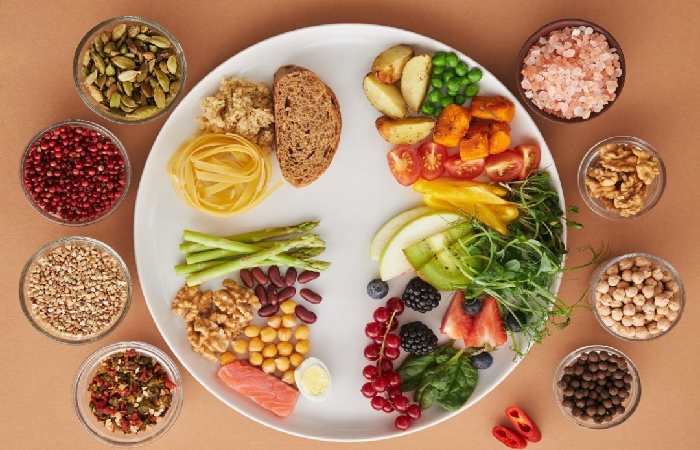
Healthy food is food that gives the body useful nutrients needed for growth, energy, repair, and overall health.
It usually contains a better balance of:
Healthy food does not have to be expensive or fancy.
That is where many people get confused.
A simple home meal like:
can be healthier than many “modern” packaged snacks marketed as healthy.
Junk food is food that is usually high in calories, sugar, salt, unhealthy fats, or refined ingredients, but low in important nutrients.
That means it may fill your mouth—but not help your body much.
Not all junk food is “poison.”
The real problem is how often and how much people eat it.
That is a much more useful explanation than just saying “junk food is bad.”
Most school articles stop at “healthy good, junk bad.”
That is too shallow.
The real difference is this:
That is why one helps you over time, and the other can slowly create problems if it becomes a habit.
| Feature | Healthy Food | Junk Food |
|---|---|---|
| Nutrition | High | Usually low |
| Energy | Steady | Quick but short-lasting |
| Ingredients | More natural, less processed | Often highly processed |
| Sugar/Salt/Oil | Usually moderate | Often high |
| Fibre | Usually good | Usually low |
| Effect on body | Supports health | Can harm health if frequent |
| Hunger control | Keeps you full longer | Often causes quick hunger again |
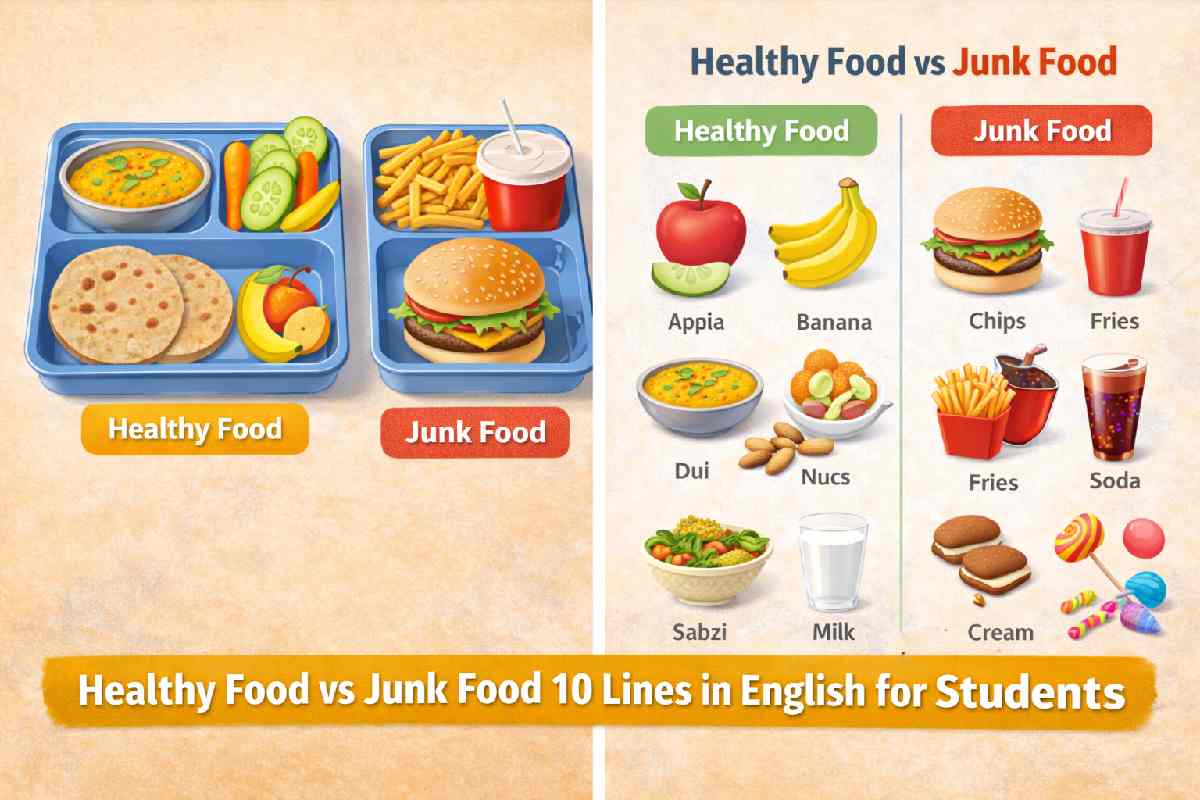
| Examples | Fruits, dal, eggs, roti, vegetables | Chips, soda, fries, burgers, candy |
Healthy food helps your body work better. Junk food mainly gives taste and temporary satisfaction.
That sentence works very well in school writing and AI snippets too.
Healthy food matters because the body needs real fuel, not just calories.
A child who eats mostly:
may feel:
That is one reason healthy school lunches and snacks matter.
Junk food becomes a problem when it changes from sometimes food to daily food.
In India, this matters because junk food is now more available than ever:
So the issue is not only “kids like junk food.”
The issue is that junk food has become too easy, too cheap, and too frequent.
This section is important because this keyword is often searched for school work.
Compare these two tiffins:
Both may “fill the bag,” but only one truly helps the student.
That is the real difference.
This is where many school-style articles are too basic. They don’t explain real-life confusion.
Not always.
For example:
can still be unhealthy even if homemade.
Also not true.
Some outside food can be decent if it includes:
This is one of the biggest myths.
Healthy food can still be tasty:
Here is the easiest way to explain the topic in real life.
That means:
This is a more realistic message than “never eat junk food.”
Because in real life, balance works better than fear.
This kind of example list is useful for:
Fact: Many affordable Indian foods are healthy, like dal, banana, peanuts, curd, eggs, and seasonal vegetables.
Fact: Frequency matters too. Even small amounts daily can shape poor eating habits.
Fact: Children need enjoyable food, not constant processed food.
Fact: Junk food affects energy, focus, digestion, and long-term health too—not just weight.
If you want to explain this topic in a practical way, use this simple rule:
If the answer is mostly no, it is probably closer to junk food.
That is an easy framework students and parents can actually use.
So if someone asks you to explain healthy food vs junk food 10 lines, the best answer is simple:
Healthy food helps your body grow, stay active, and stay well. Junk food may taste good, but too much of it can harm your health over time.
That is the core idea.
And if you want the smartest version of this topic, remember this:
The goal is not to fear food. The goal is to choose better food more often.
That is a better life lesson than just memorizing 10 lines.
Healthy food gives the body useful nutrients, while junk food usually gives more calories, sugar, salt, or unhealthy fats than nutrition.
Yes. Junk food can be eaten sometimes, but it should not become a daily habit.
Healthy food supports growth, energy, memory, concentration, and immunity, which are all important for school performance.
No. Homemade food can still be unhealthy if it is too oily, sugary, fried, or unbalanced.
Examples include fruits, vegetables, dal, eggs, curd, milk, nuts, and roti with sabzi.
Examples include chips, burgers, fries, soft drinks, candy, and sugary biscuits.
Healthy food is better for everyday eating because it supports the body, while junk food should be occasional.

I’m Mohammed Shareef — editor and Admin of healthglowera. I simplify topics like beauty, skincare, haircare, wellness,tech,gadjets and online safety into clear, practical advice that readers can actually use. I focus on creating helpful, trustworthy content backed by research and real-world insights. You can reach me at contact@healthglowera.com



Sign up to receive exclusive content updates, fashion & beauty tips!

Copyright © 2026 All Rights Reserved By Health Glowera