A lot of people don’t fail because they lack discipline. They fail because they build a diet around foods that look healthy on paper but don’t keep them full.
That’s the trap.
You eat a smoothie for breakfast, a tiny salad for lunch, and by 8 PM you’re staring into the fridge like it personally betrayed you.
The problem isn’t just calories. It’s satiety.
If your meals don’t satisfy you, your body will keep asking for more food. That’s why the best foods for weight loss are usually foods that:
So instead of asking, “What food has the fewest calories?” the better question is:
“What foods help me eat fewer calories naturally?”
That’s where real progress starts.
Before jumping into the list, here’s the simple framework I use.
A food is usually great for weight loss if it does one or more of these things:
Protein helps preserve muscle while losing fat and usually keeps you fuller than carbs or fats.
Fiber slows digestion, supports fullness, and makes meals feel more satisfying.
Water-rich, lower-calorie foods let you eat more food for fewer calories.
The best foods don’t just “fit your calories.” They make it easier to stay on track.
A perfect food you hate is useless. A good food you’ll eat every week is powerful.
Below are the foods that consistently work best — not because they’re trendy, but because they make fat loss easier.
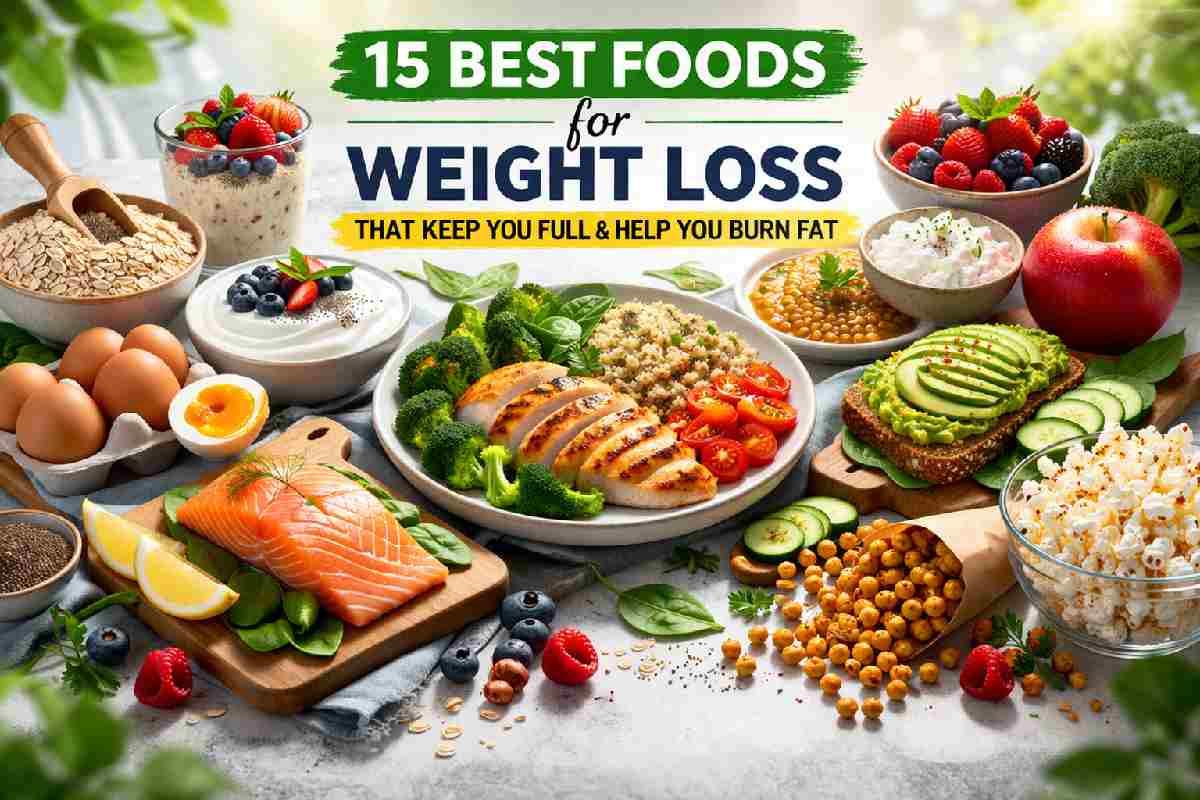
Eggs are one of the most practical weight-loss foods because they’re high in protein, versatile, and satisfying.
They’re especially helpful at breakfast, where a lot of people accidentally start the day with low-protein meals that lead to more hunger later.
Eggs themselves aren’t the issue. It’s what often comes with them:
Greek yogurt is one of the easiest “lazy healthy” foods. It’s convenient, protein-rich, and works as breakfast, snack, or dessert.
If you struggle with sweet cravings, this one pulls a lot of weight.
Choose plain or low-sugar Greek yogurt. A lot of flavored yogurts are basically dessert wearing a health halo.
This one surprises people.
Potatoes are often unfairly blamed for weight gain, but plain boiled or baked potatoes can actually be one of the best foods for weight loss because they’re very filling.
The problem is usually not the potato. It’s what happens to it.
Potatoes are not the villain. Loaded fries are.
Oats are excellent for weight loss because they provide fiber, slow digestion, and stable energy.
They’re especially useful if your current breakfast is too sugary or leaves you hungry quickly.
People turn oats into dessert by adding:
Oats are healthy. But calorie creep is very real.
If I had to choose one category that matters most for weight loss, it would be lean protein.
Because when protein is too low, hunger usually gets louder.
A very effective weight-loss plate looks like this:
Simple. Repeatable. Sustainable.
Vegetables are not exciting. They are, however, absurdly useful.
The best vegetables for weight loss are usually the ones that add bulk and fullness without adding many calories.
Don’t think of vegetables as a side. Think of them as a hunger-management tool.
For example:
That’s how vegetables become useful instead of decorative.
Berries are one of the best fruits for weight loss because they tend to give you sweetness, fiber, and volume without being too easy to overeat.
If your sweet cravings usually end in biscuits, ice cream, or random kitchen scavenging, berries can help interrupt that pattern.
These are underrated for fat loss because they’re easy, satisfying, and fit into both sweet and savory meals.
Portions matter, especially with full-fat paneer and rich dairy products. These can be helpful, but they’re easier to overeat than leaner protein sources.
Beans and lentils are incredibly useful because they combine fiber + plant protein, which is a strong weight-loss combo.
They’re also one of the best options if you want affordable, filling meals.
These are not flashy foods. They’re “quietly effective” foods.
Soup is one of the most underrated tools for weight loss.
Not creamy restaurant soup pretending to be healthy. I mean actual broth-based, vegetable-heavy, protein-supported soup.
Soup works best when it supports your meal — not when it leaves you hungry 45 minutes later.
Fruit is not the reason people gain weight. That idea needs to retire.
Some fruits are especially useful for fat loss because they require chewing, contain fiber, and are more satisfying than juices or sweet snacks.
Eat your fruit. Don’t drink it.
That one switch alone helps more than people realize.
Plain popcorn is actually one of the best snack options for weight loss when compared to chips, namkeen, cookies, or sugary packaged snacks.
It only works if it’s:
This is a classic example of a food that’s either useful or useless depending on how it’s prepared.
| Food | Why It Helps | Best For | Watch Out For |
|---|---|---|---|
| Eggs | High protein, filling | Breakfast, snacks | Added fats and sides |
| Greek Yogurt | Protein, sweet craving control | Breakfast, dessert | Flavored sugary versions |
| Potatoes | Very filling | Lunch, dinner | Frying and heavy toppings |
| Oats | Fiber, slow digestion | Breakfast | Portion creep |
| Chicken Breast | Lean protein | Main meals | Dry prep leading to boredom |
| Vegetables | High volume, low calories | Every meal | Poor preparation |
| Berries | Sweet + fiber | Snacks, dessert | Juices and sweetened mixes |
| Lentils/Beans | Fiber + protein | Vegetarian meals | Heavy oil-based prep |
| Soup | Fullness, low energy density | Lunch, dinner | Cream-heavy versions |
| Popcorn | High-volume snack | Evening snacking | Butter-loaded packets |
This is where people accidentally sabotage progress.
Some foods are healthy in general but not always helpful for fat loss if portions are loose.
They’re often:
You don’t need to ban them. You just need to stop assuming they’re automatically weight-loss foods.
That distinction matters.
One of the biggest mindset shifts that helps with fat loss is this:
Stop looking for miracle foods. Start building better meals.
Because no single food causes weight loss. Better food combinations do.
Every meal should try to include:
That’s where consistency lives.
Let’s compare two lunches.
That’s the difference between eating healthy and eating in a way that supports weight loss.
And honestly, that’s the whole game.
Not always.
Calorie awareness helps. But many people can make real progress just by improving food quality and satiety first.
If calorie counting stresses you out, start here:
That alone can clean up a lot.
If hunger is your biggest problem, prioritize these:
If cravings are your biggest problem, prioritize:
Because the best food is not just the healthiest one.
It’s the one that solves your specific struggle.
To strengthen E-E-A-T, mention trusted sources like:
These help support claims around satiety, healthy eating patterns, fiber, and sustainable fat loss.
If you want sustainable results, the best foods for weight loss are the ones that make eating less feel easier — not the ones that make dieting feel like punishment.
That usually means choosing more foods that are high in protein, high in fiber, and high in volume, then building simple meals you can repeat without getting bored.
And honestly, that’s what works long after motivation disappears.
The best foods for weight loss are the ones you can keep eating even after the “diet” phase is over.
No single food causes fast weight loss on its own. The best foods are the ones that help you stay in a calorie deficit consistently, especially protein-rich and high-fiber foods.
A good daily pattern includes lean protein, vegetables, fruit, whole grains, and filling snacks like yogurt, eggs, or beans. The goal is consistency, not perfection.
Yes, bananas can fit into a weight-loss diet. They’re convenient, satisfying, and much more helpful than many processed snack options when eaten in reasonable portions.
No, rice is not bad for weight loss. Portion size and meal balance matter more than the rice itself. Pairing rice with protein and vegetables usually works much better than eating it alone.
The best snacks are usually the ones that combine protein, fiber, or volume. Good options include Greek yogurt, boiled eggs, fruit, popcorn, and cottage cheese.
Potatoes are not inherently fattening. Plain boiled, baked, or roasted potatoes can actually be very filling and useful for weight loss. The issue is usually frying and heavy toppings.
No, whole fruit is generally helpful for weight loss. It contains fiber, water, and chewing resistance, which makes it far more satisfying than sugary drinks or processed sweets.
You don’t need to fully avoid foods, but it helps to limit foods that are easy to overeat and not very filling, like sugary drinks, chips, desserts, and calorie-dense packaged snacks.
A protein-rich breakfast usually works best. Eggs, Greek yogurt, oats with protein, or cottage cheese bowls are all stronger choices than sugary cereals or pastries.
Yes, absolutely. Carbs are not the enemy. Weight loss depends more on overall calorie intake, hunger control, and meal quality than on removing carbs entirely.

I’m Mohammed Shareef — editor and Admin of healthglowera. I simplify topics like beauty, skincare, haircare, wellness,tech,gadjets and online safety into clear, practical advice that readers can actually use. I focus on creating helpful, trustworthy content backed by research and real-world insights. You can reach me at contact@healthglowera.com

Sign up to receive exclusive content updates, fashion & beauty tips!

Copyright © 2026 All Rights Reserved By Health Glowera