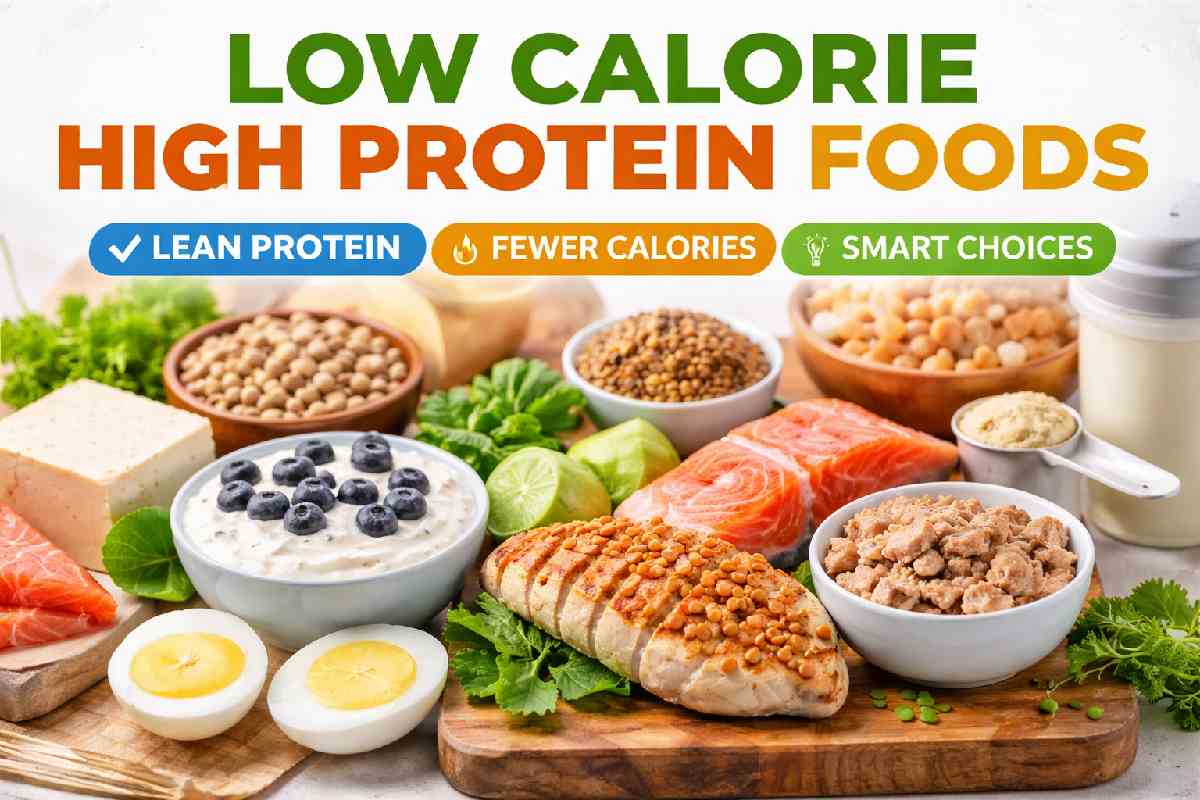
Low calorie high protein foods are not just about eating lean—they are about maximizing protein per calorie to improve fat loss, muscle retention, and diet sustainability.
Most people think eating “healthy” means eating less. That’s the problem. When calories drop too low without enough protein, hunger increases, muscle loss begins, and diets fail.
The smarter approach is simple: eat foods that give you more protein for fewer calories. This helps you stay full, preserve muscle, and lose fat more efficiently.
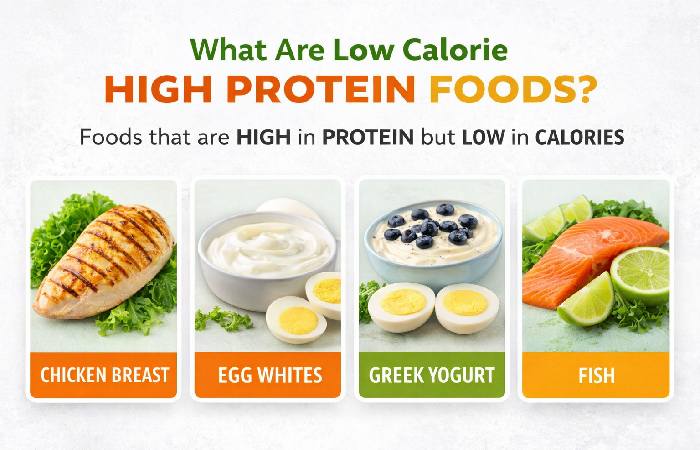
These are foods that provide high protein content with relatively low calories.
Examples:
But here’s the key insight:
Not all high-protein foods are efficient.
For example:
That’s where Protein Efficiency comes in.
Instead of asking:
“How much protein is in this food?”
Ask:
“How much protein do I get per 100 calories?”
These are the most efficient sources because they provide complete protein with fewer calories.
While slightly higher in calories, they are excellent for fiber and long-term health.
Best for convenience, but avoid over-reliance on processed powders.
| Country | Popular Brand | Product | Avg Price | Availability |
|---|---|---|---|---|
| India | Amul | Greek Yogurt | ₹40–₹60 | High |
| USA | Chobani | Greek Yogurt | $1–$2 | High |
| UK | Arla | Protein Yogurt | £1–£2 | High |
| Australia | Farmers Union | Yogurt | AUD 2–3 | Medium |
| Canada | Oikos | Yogurt | CAD 1–2 | High |
Over the past few years, demand for high-protein foods has increased due to:
This shift is supported by organizations like WHO and Harvard School of Public Health, which emphasize protein’s role in satiety and metabolic health.
If you remember one thing, remember this:
Choose foods based on protein per calorie—not just protein alone.
Start simple:
That’s what actually works.
This guide follows evidence-based nutrition principles commonly referenced by institutions like Harvard Health, WHO, and NIH, focusing on sustainable and practical diet strategies rather than trends.
Chicken breast is one of the best because it offers high protein with low calories and is widely available.
Yes, but only as a supplement. Whole foods are more filling and nutritionally complete.
No. Balance is essential. You still need fats, carbs, and micronutrients.
Egg whites are, but whole eggs have moderate calories due to fat content.
Animal protein is more efficient, but plant protein offers fiber and long-term health benefits.
It depends on your body weight and goals, but generally 0.8–1.6g per kg body weight.
Not necessarily. Foods like lentils, eggs, and yogurt are affordable options.
Yes, using lentils, tofu, and dairy products.
Yes, especially when combined with resistance training.
Focusing only on protein quantity instead of protein efficiency and overall diet balance.

I’m Mohammed Shareef — editor and Admin of healthglowera. I simplify topics like beauty, skincare, haircare, wellness,tech,gadjets and online safety into clear, practical advice that readers can actually use. I focus on creating helpful, trustworthy content backed by research and real-world insights. You can reach me at contact@healthglowera.com



Sign up to receive exclusive content updates, fashion & beauty tips!

Copyright © 2026 All Rights Reserved By Health Glowera